

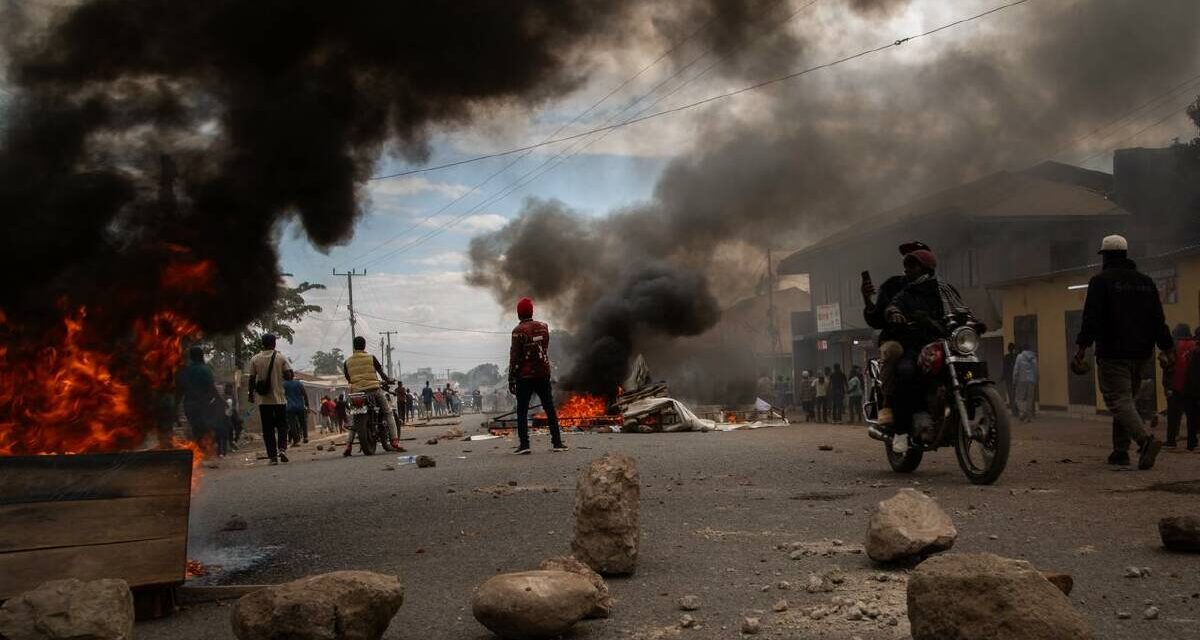
Tanzania post-elections unrest
Dar es Salaam, November 2025. Smoke rises above the skyline as protesters clash with police. Tear gas drifts through the streets, gunfire echoes in crowded neighborhoods, and the ruling party’s banners hang limp in the chaos. Tanzania, once praised as East Africa’s most stable democracy, is now convulsed by its worst political crisis in years.
The immediate spark was the October 29 general election, where President Samia Suluhu Hassan was declared the winner with nearly 98 percent of the vote. Opposition leaders had been jailed or barred from running, leaving the ruling Chama Cha Mapinduzi (CCM) virtually unchallenged. Protests erupted across Dar es Salaam, Mwanza, and Zanzibar, met with live ammunition, curfews, and internet blackouts. The opposition Chadema claimed hundreds of deaths, while the UN Human Rights Office confirmed dozens.
But this violence is not just about one election. It is the culmination of Tanzania’s long political journey, shaped above all by Julius Nyerere, the country’s founding father.
Nyerere’s Legacy
Nyerere united Tanganyika and Zanzibar into modern Tanzania in 1964, forging a nation from more than 120 ethnic groups. His vision of Ujamaa (African socialism) emphasized equality, education, and self-reliance. Under his leadership, literacy rates soared, health services expanded, and Tanzania avoided the ethnic bloodshed that scarred many of its neighbors. His pan-Africanist ideals inspired liberation movements across the continent, and his moral authority earned him respect far beyond Tanzania’s borders.
Yet Nyerere’s policies also left scars. His Arusha Declaration of 1967 led to widespread nationalization and forced villagization. Intended to foster unity and development, these measures disrupted rural life, weakened agricultural productivity, and left the economy dependent on foreign aid. Politically, his one-party system under CCM suppressed dissent and entrenched a culture of authoritarianism. The seeds of today’s unrest—restricted civic space, opposition exclusion, and state dominance—were planted during his nearly three decades in power; upto the late John Mangufuli, dubbed “strong man and visionary”, who preceded Samia Suluhu.
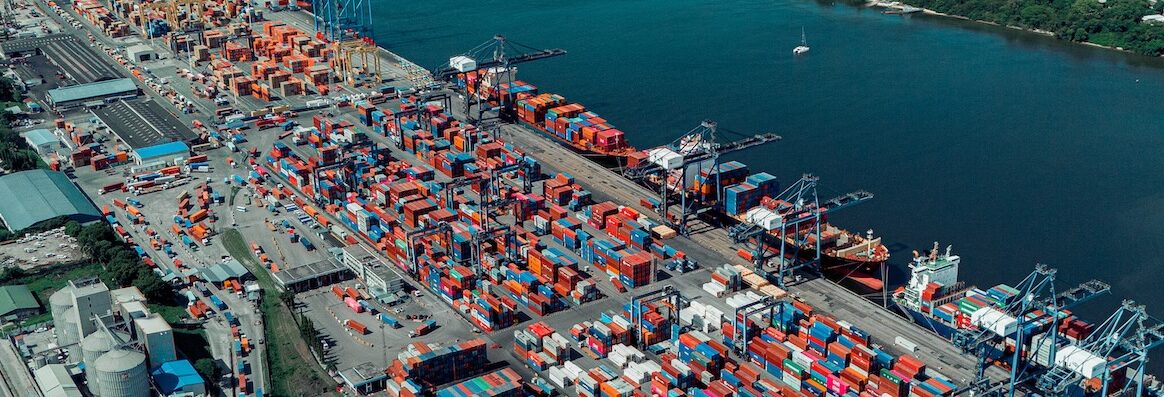
The Dar es Salaam port, crucial logistical hub for Tanzania and for landlocked countries like Uganda, Zambia, Rwanda, Burundi, and the DRC, is in expansion, and increased performance
From Past to Present
The authoritarian reflexes deepened under John Magufuli (2015–2021), whose “bulldozer” style brought infrastructure projects and anti-corruption campaigns but also media censorship and shrinking civic space. His successor, Hassan, initially promised openness, but the 2025 elections revealed continuity: opposition excluded, dissent criminalized, and security forces unleashed.
Economically, Tanzania has posted steady growth—averaging 6 percent annually—driven by agriculture, mining, and infrastructure. Yet prosperity has not been evenly shared. Urban youth face high unemployment and precarity, while rural communities struggle with poverty and limited access to services. The frustration of a generation excluded from both political participation and economic opportunity has become combustible fuel for protests.
Socially, trust in institutions has eroded. Courts, electoral commissions, and even the police are seen as extensions of CCM. In Zanzibar, long-standing grievances over autonomy add another layer of volatility.
From the hopeful days of Nyerere’s nation-building to the authoritarian reflexes of his successors, Tanzania’s trajectory has been marked by unity and repression, progress and stagnation. Today’s clashes are not just about Samia Suluhu Hassan’s contested victory—they are the eruption of tensions that have simmered for generations.
References:
• Human Rights Watch – “Tanzania: Killings, Crackdown Follow Disputed Elections” (Nov 4, 2025)
• CBS News/AFP – “Tanzania political opposition says 700 people killed amid unrest over election” (Oct 31, 2025)
• Wikipedia – 2025 Tanzanian election protests
• Julius Nyerere Foundation – Nyerere’s Nationalist Legacy.
Cet article est également disponible en :











Very good article
Thank you for this information