

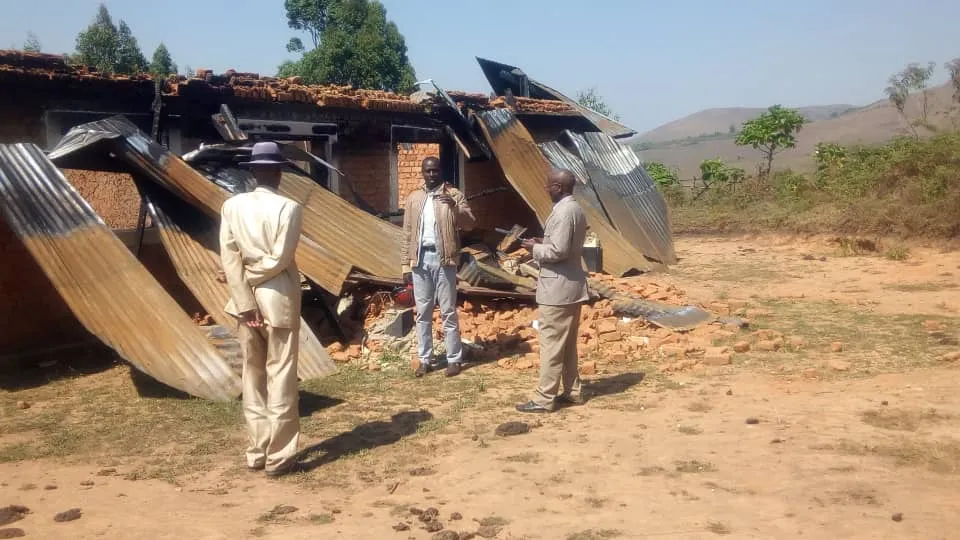
FNDB/FARDC/Merceneries bombing by drones thousands of people and hundreds of villages in Minembwe during several months in 2025 – Photo SosMediasBurundi
Inside the 2025 Humanitarian Crisis and the Battle for South Kivu’s Highlands
A Flashpoint in South Kivu’s Turmoil
In the waning months of 2025, the remote highlands of Minembwe, nestled in the troubled South Kivu province, became the stage for a dramatic siege—one that would shape the region’s fate and underscore the devastating human cost of war in eastern Congo. For months, the Burundian National Defence Force (FDNB), fighting alongside the Congolese army (FARDC) and Wazalendo militias, imposed a punishing blockade on the Banyamulenge community.
The siege was marked by strangling roadblocks, drone bombardments, and a deliberate strategy of starvation that drew condemnation and resistance in equal measure. In December, a sweeping counter-offensive by the M23/AFC alliance would shatter the blockade, bringing both relief and new uncertainties to the highlands.
Blockade—Starvation as a Weapon (October–November 2025)
By October 2025, Minembwe was effectively sealed off from the outside world. Burundian troops, entrenched in Mikalati and Bijombo, erected roadblocks that severed vital lifelines, preventing Banyamulenge civilians from accessing markets or receiving desperately needed supplies. The result was swift and brutal: the price of salt soared from $1 to $10, while sugar and soap all but vanished from shelves. Medical deliveries stopped, leaving the sick and wounded with nowhere to turn.
The humanitarian toll was harrowing. Local sources reported severe shortages and spiraling prices that placed even basic survival out of reach. According to SOS Médias Burundi, the blockade created a catastrophic spike in living costs, while Crisis Group’s Crisis Watch (November 2025) estimated that at least 172,000 people were trapped inside the besieged highlands.
On November 4, the streets of Minembwe saw a remarkable act of defiance. Thousands of Banyamulenge women and youth marched from the town center to Madegu, carrying signs that decried the “suffocation” imposed by Burundian troops. Their message was clear: end the siege and let the community survive. Protesters accused the FDNB of orchestrating a campaign of starvation, alleging an intent to “exterminate” the population through deprivation. Crisis Group: CrisisWatch November 2025 (172,000 trapped)
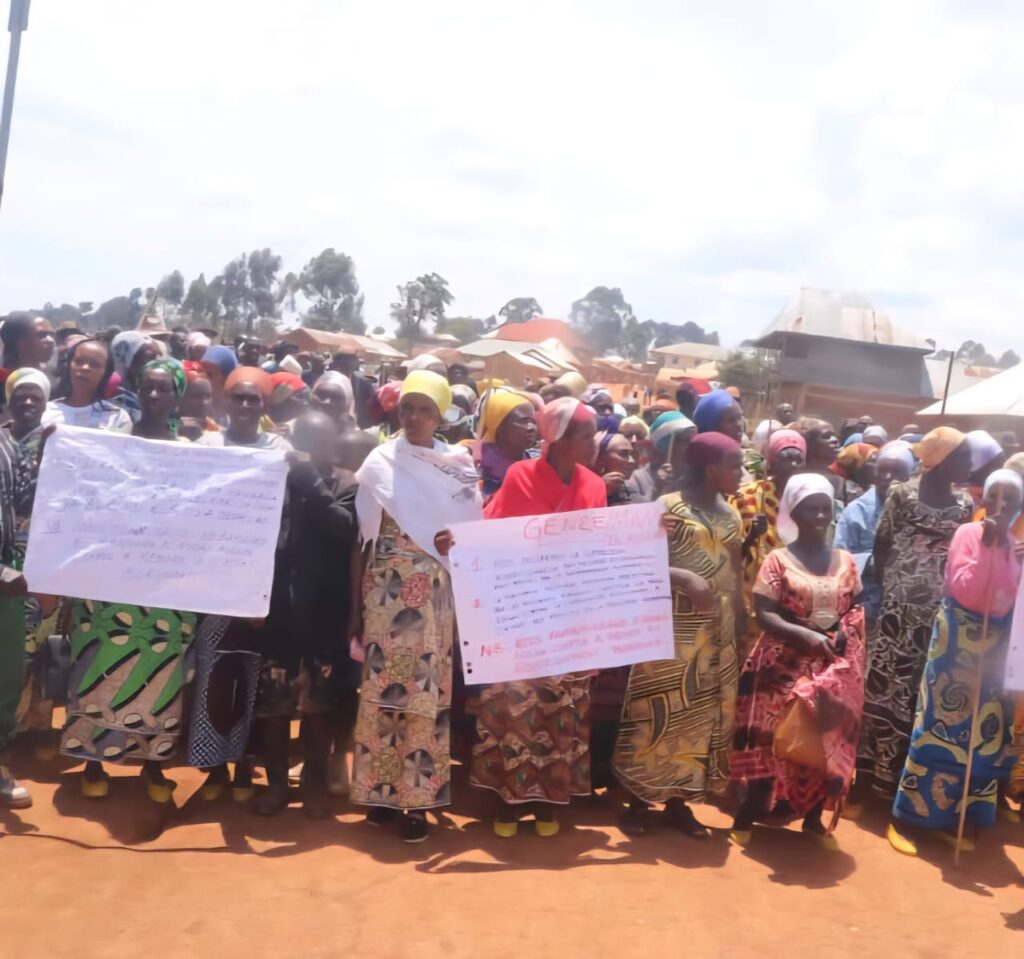
Women from the Banyamulenge community protested with placards in hand against the blockade imposed by the Burundian army on 4 November 2025 – Photo SosMediasBurundi
Drone Wars—Aerial Bombardment Escalates the Crisis
As the blockade tightened, so did the violence. November brought a chilling new dimension to the conflict: the use of armed drones by coalition forces. Reports from SOS Médias Burundi detail a campaign of drone strikes attributed to the FARDC/FDNB/Mercenaries alliance, targeting both civilian areas and camps for internally displaced persons (IDPs).
On November 21, drones bombed the area around Mikenge, zeroing in on a camp sheltering Banyamulenge IDPs. Similar strikes pummeled Rwisankuku, destroying homes and compounding the terror of a population already trapped by the siege. The introduction of aerial warfare in the remote highlands marked a dangerous escalation, with government forces seeking to break the resistance of the Twirwaneho self-defense groups—one of the region’s last lines of community defense.
Counter-Offensive and Burundian Retreat
The siege would ultimately be broken not by diplomacy, but by the thunder of a military counter-offensive. In early December, the M23—fighting under the Alliance Fleuve Congo (AFC) banner—launched a sweeping campaign in South Kivu. Their aim: link up with the Twirwaneho and liberate the highlands. The operation quickly overwhelmed government coalition defenses in the Ruzizi Plain, culminating in the capture of the strategic city of Uvira and a rapid push southward toward Fizi.
The breaking point came as Burundian forces, cut off and facing encirclement, began a chaotic withdrawal. By December 16, thousands of FDNB soldiers were seen fleeing across Lake Tanganyika, boarding boats at Baraka and Mboko in a desperate retreat back to Burundi. The collapse of the Burundian presence effectively lifted the siege on Minembwe, reopening supply routes and offering a lifeline to a community ravaged by months of isolation.
The Aftermath
The siege and subsequent liberation of Minembwe stand as a stark illustration of how a community bear the brunt of genocidal attempts in eastern Congo, with starvation, and drone bomb attacks by two government armies in total impunity. While the blockade has ended, the scars of starvation, displacement, and bombardment remain fresh.
In the meantime, a wave of drone strikes attributed to the FARDC, its Burundian ally, the FNDB, and Mercenaries hit Masisi, Minembwe, and triggered a symbolic funeral in Goma this month, leaving civilians dead and dozens wounded, beginning January 2026.











Very good article
Thank you for this information