For nearly half a century, the global automotive playbook was dictated by Detroit, Wolfsburg, and Tokyo. Under China’s early industrial framework, foreign automakers were required to form equal joint ventures with domestic state-owned enterprises, exchanging manufacturing know-how for market access. Today, that technological flow has completely inverted. China is no longer adapting Western automotive engineering; it is directing the global evolution of software-defined electric architectures, multi-motor torque vectoring, and real-time artificial intelligence.
This structural shift is clearest in cross-border capital flows. Legacy European and American automakers now actively license Chinese electric vehicle platforms and autonomous driving software to maintain market parity. Volkswagen acquired a strategic stake in
The Engineering Breakthrough: Quad-Motors and Active Chassis AI
At the mechanical level, Chinese automakers have integrated artificial intelligence directly into chassis dynamics. By assigning dedicated electric motors to individual wheels or installing hub motors inside wheel rims, these platforms calculate torque adjustments thousands of times per second. This enables heavy luxury vehicles to execute zero-radius tank turns on dry pavement, crab walk diagonally across off-road obstacles, and remain stable during high-speed tire blowouts.
Complementing per-wheel drivetrains are electro-hydraulic active suspensions. Connected to Lidar and high-frequency camera suites, these chassis systems scan road surfaces in real time and adjust individual wheel dampening in one millisecond. The result is a total decoupling of road harshness from cabin movement, allowing luxury sedans to keep passengers virtually motionless over extreme bumps.
Flagship Showcases: Chinese Innovations vs. Western Benchmarks
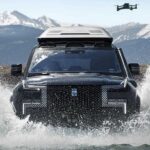
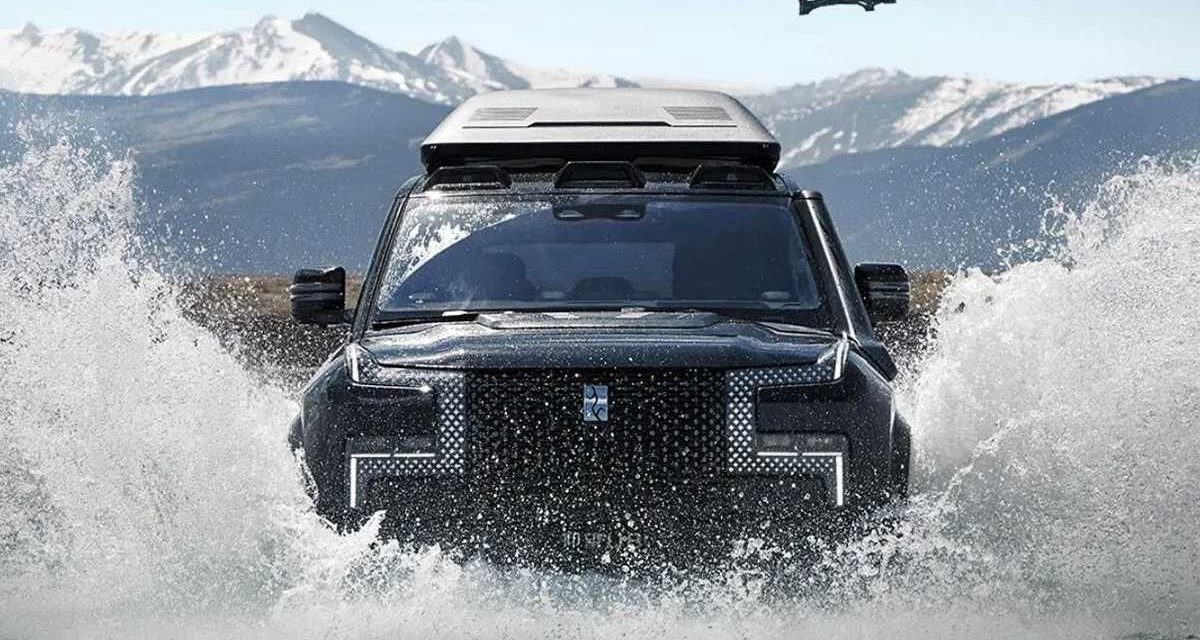
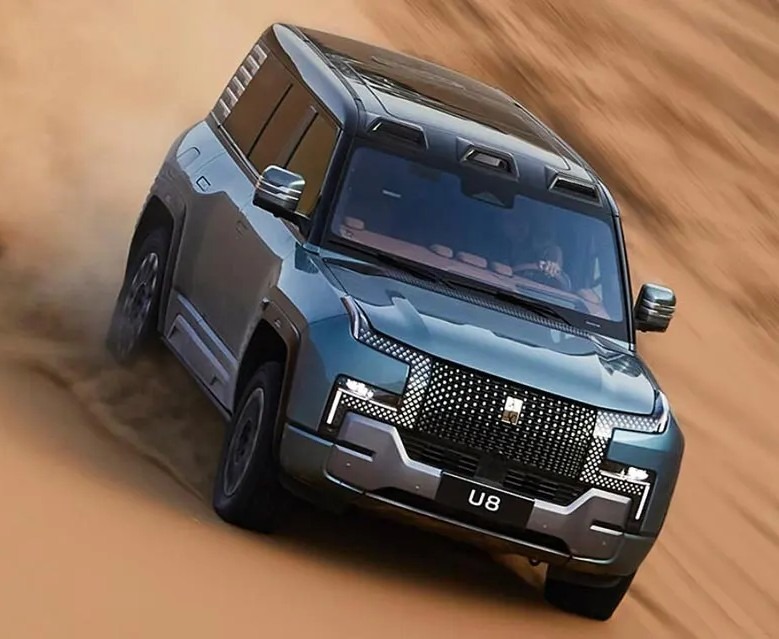
The BYD Yangwang U8 demonstrates the extreme utility of quad-motor integration. Built on the e4 platform with eleven hundred and eighty-four horsepower, it performs three-hundred-and-sixty-degree tank turns and features an IP68-sealed hull that floats and steers through deep water at three kilometers per hour during emergencies. Domestic factory pricing starts at approximately one hundred and sixty thousand dollars, offering twice the horsepower and unique amphibious safety compared to the electric Mercedes-Benz G 580 with EQ Technology, which retails near two hundred thousand dollars.
The BYD Yangwang U8 demonstrates the extreme utility of quad-motor integration. Built on the e4 platform with eleven hundred and eighty-four horsepower, it performs three-hundred-and-sixty-degree tank turns and features an IP68-sealed hull that floats and steers through deep water at three kilometers per hour during emergencies. Domestic factory pricing starts at approximately one hundred and sixty thousand dollars, offering twice the horsepower and unique amphibious safety compared to the electric Mercedes-Benz G 580 with EQ Technology, which retails near two hundred thousand dollars.
In the executive flagship segment, the NIO ET9 showcases a nine-hundred-volt high-voltage architecture paired with SkyRide fully active suspension. Using steer-by-wire technology and individual hydraulic pumps at each corner, the ET9 levels the body instantaneously across road irregularities. At a domestic factory price of roughly one hundred and eight thousand dollars, it delivers advanced chassis active-cancellation technology that rivals the two-hundred-thousand-dollar Mercedes-Maybach S 580 and Porsche Panamera Executive.
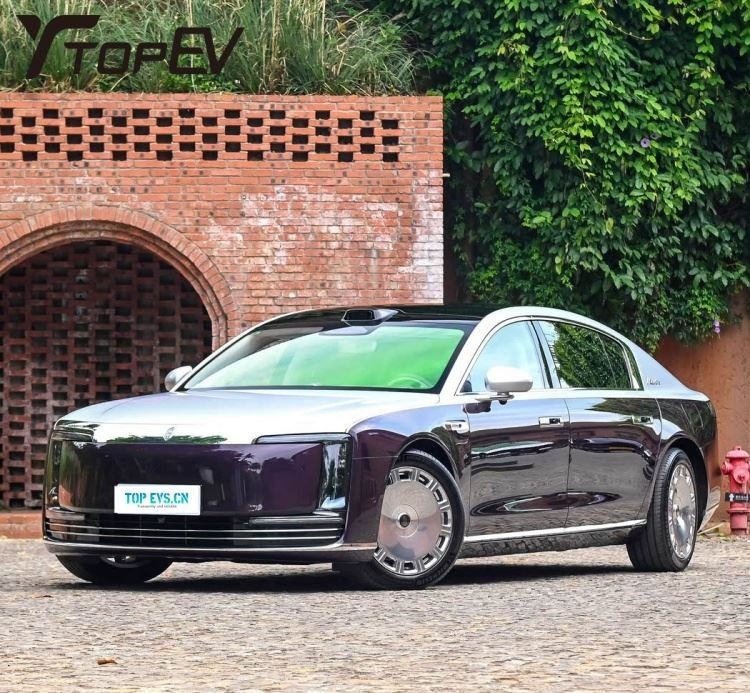
Ultra-luxury saloons are represented by the Huawei Maextro S800, a five-and-a-half-meter saloon built on the Turing chassis platform with Huawei ADS 3.0 autonomous driving computing. Its cabin features artificial intelligence zero-gravity seating that automatically adjusts passenger recline into crash-optimized postures when emergency braking is triggered. Pre-sale domestic factory prices range from ninety-eight thousand to one hundred and forty-two thousand dollars, undercutting benchmarks like the four-hundred-thousand-dollar Rolls-Royce Spectre and two-hundred-thousand-dollar Bentley Flying Spur while supplying far greater autonomous compute power.
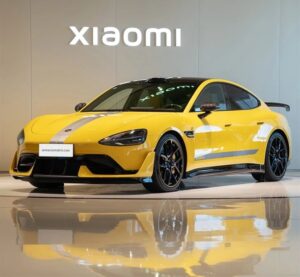
For track-focused performance, the Xiaomi SU7 Ultra packs a tri-motor powertrain producing fifteen hundred and forty-eight horsepower. It achieves zero to one hundred kilometers per hour in one point nine eight seconds, utilizes carbon-ceramic brake discs, and holds a six-minute twenty-second lap time at the Nürburgring Nordschleife. Priced at a domestic factory base of seventy-two thousand eight hundred dollars, it delivers over five hundred more horsepower than the two-hundred-and-thirty-thousand-dollar Porsche Taycan Turbo GT at less than one-third of the price.
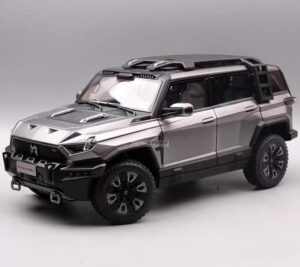
Off-road durability is anchored by the Dongfeng M-Hero 917, constructed on the MORA intelligent off-road platform with a ten-hundred-and-eighty-eight horsepower quad-motor drivetrain. Its active rear-wheel steering allows diagonal crab-walk movement across steep sand dunes, while thermal infrared night vision assists navigating unlit wilderness terrain. Domestic factory pricing starts around eighty-eight thousand dollars, providing a more agile and feature-dense alternative to the one-hundred-and-ten-thousand-dollar GMC Hummer EV SUV.
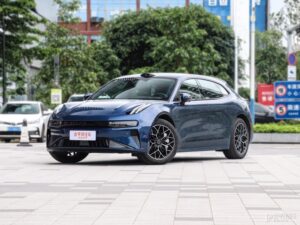
The Zeekr 001 FR shooting brake redefines sport wagons by outputting twelve hundred and sixty-five horsepower through four silicon-carbide electric motors with dedicated oil-cooling channels. The independent motor setup performs dry-asphalt tank turns and precise torque vectoring during cornering. At a domestic factory cost of one hundred and seven thousand dollars, it provides a quad-motor chassis superior in lap thermal management to the Tesla Model S Plaid and Porsche Taycan Cross Turismo.
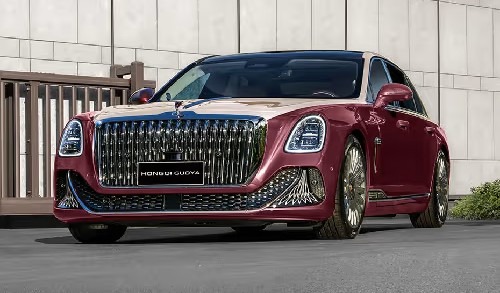
State-level luxury is captured by the Hongqi Guoya, combining turbocharged V6 and V8 hybrid powertrains with active cabin noise cancellation, electrochromic privacy glass, and real-time passenger biometric monitoring. Estimated factory pricing ranges between one hundred and forty thousand and one hundred and ninety thousand dollars, presenting an artificially intelligent competitor to traditional flagship luxury saloons such as the Bentley Continental Flying Spur.
The Western Tariff Landscape and Global Market Friction
Despite domestic price advantages, Chinese automakers face significant trade barriers when expanding into Western consumer markets.
In the European Union, the regulatory framework combines a baseline ten percent auto duty with tiered countervailing tariffs ranging from seventeen percent to thirty-five point three percent, depending on individual brand subsidies.
To navigate these trade barriers, Chinese manufacturers are adapting their global strategy. BYD is constructing a vehicle assembly plant in Szeged, Hungary, while Chery partnered to re-establish manufacturing in Barcelona, Spain.