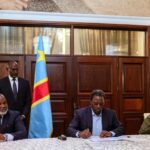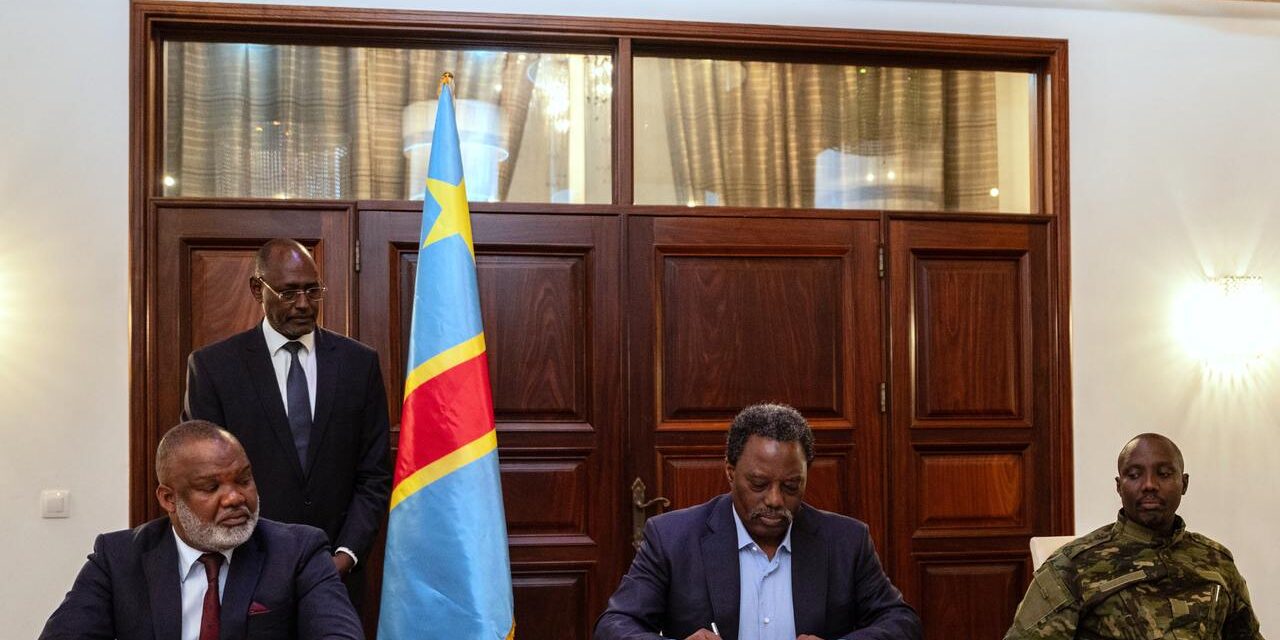
Joseph Kabila, signing with Corneille Nangaa (AFC), Bertrand Bisimwa and Sultani Makenga (M23), the birth of the FRN (Front for the Refoundation of the Nation) in Goma on 12th October 2026
The establishment of the Front for the Refoundation of the Nation (FRN) marks a radical political and military turning point in the Democratic Republic of the Congo. By placing former President Joseph Kabila at the helm of a merged coalition combining Corneille Nangaa’s Congo River Alliance (AFC) and the March 23 Movement (M23), the eastern conflict has morphed from a provincial insurgency into a direct battle for national state power against President Félix Tshisekedi.
Strategic Shift in the Command Structure
Rather than remaining a localized armed rebellion in North and South Kivu, the FRN unifies political opposition groups, armed rebel battalions, and localized ethnic militias under a singular operational command. Joseph Kabila serves as the supreme political head, flanked by Corneille Nangaa and M23 political chief Bertrand Bisimwa, while General Sultani Makenga commands the military wing.
This restructuring allows the FRN to pool financial resources, and organize dedicated channels to encourage military desertions within the regular armed forces (FARDC). By leveraging Kabila’s eighteen-year legacy as commander-in-chief, the movement actively targets internal divisions inside Kinshasa’s defense apparatus.
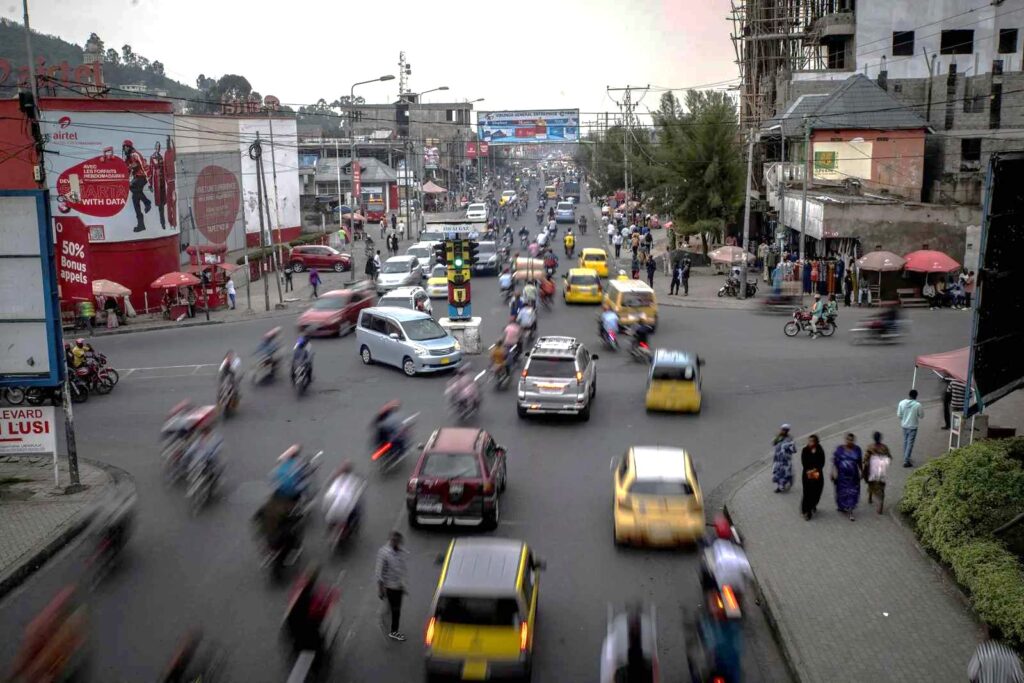
Goma, proclaim the FRN, has become the most secure and clean city in DRC, with more than 50 roads construction sites | Photo Arlette BashiziReuters
The Risk of a Political “Rébellion Alimentaire”
The recent influx of nearly 150 Kinshasa politicians into the FRN masks the risk of a political rébellion alimentaire—an opportunistic migration driven by financial survival over ideological conviction.
While artificially inflating opposition numbers, these job-seekers hunt for stipends and transitional posts, mirroring the structural rot of the Rassemblement Congolais pour la Démocratie (RCD) in the late 1990s when bureaucratic bloat drained vital resources away from the military effort.
For Joseph Kabila, this administrative bloat is a ticking time bomb. Competition for limited funds and titles in Goma threatens to breed factionalism, paralyzing the FRN’s operational agility and sparking the same internal divisions that ultimately fractured the RCD.
Active Combat Fronts Across the Kivus
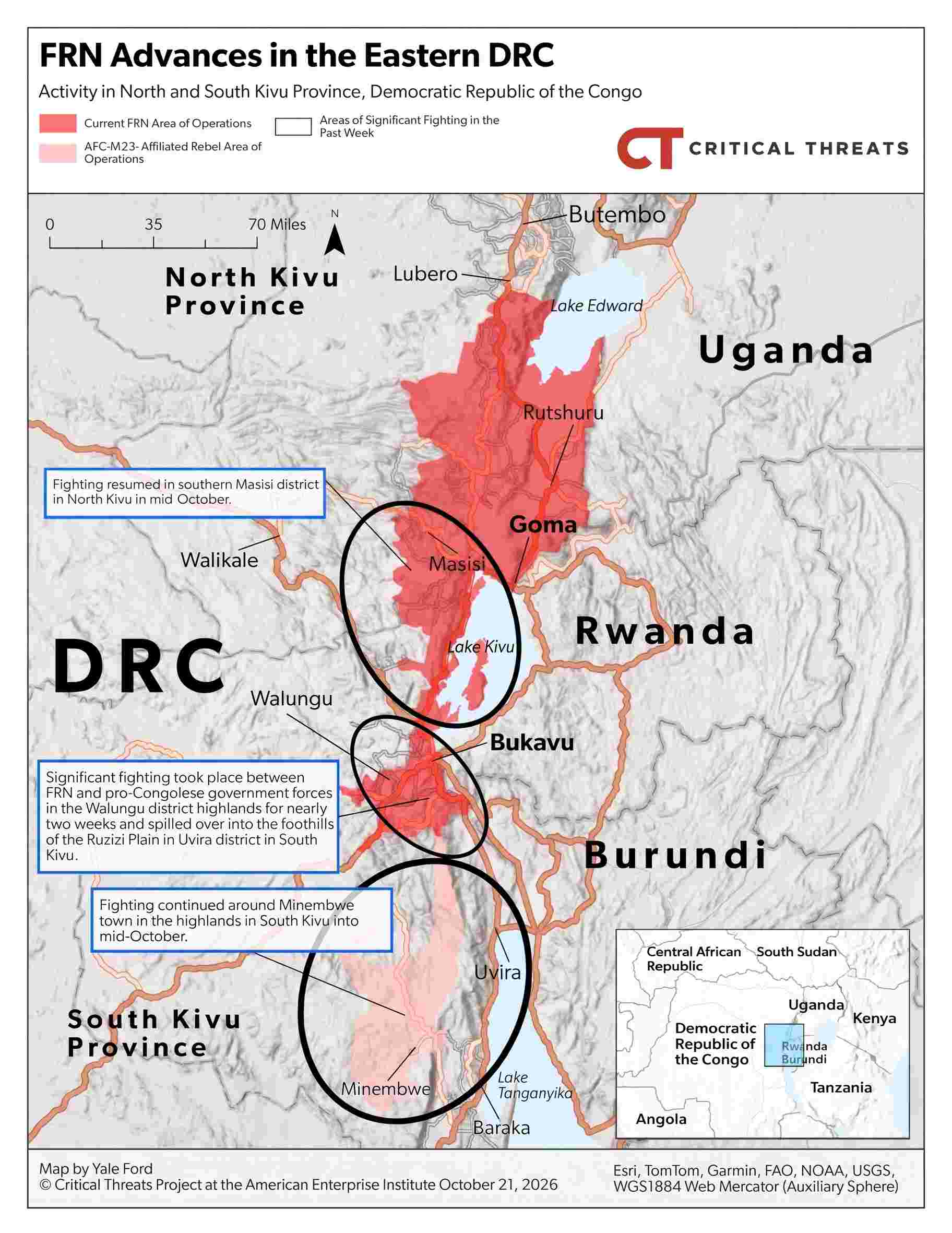
On the ground, fighting between the FRN and the pro-government alliance—comprising the FDLR Forces, Mercenaries, Burundian troops, FARDC and Wazalendo militias —is concentrated across three principal operational corridors:
-
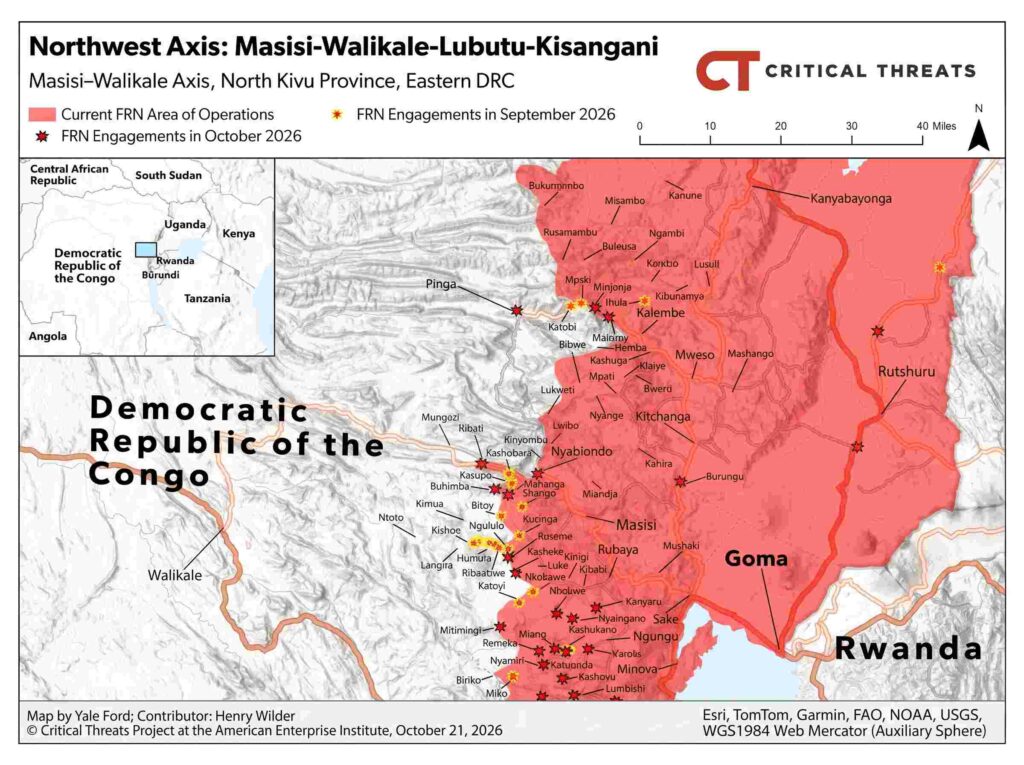
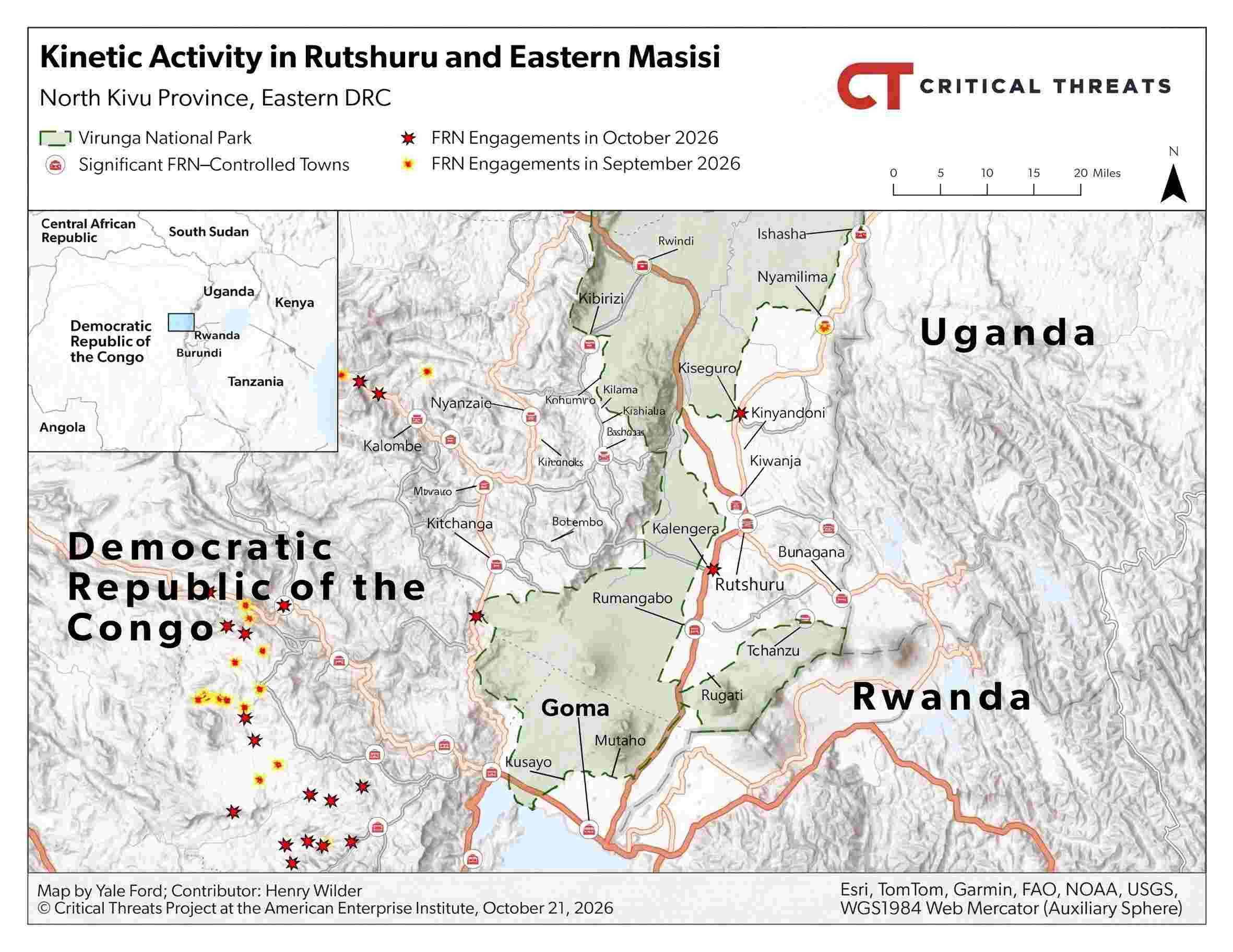
North Kivu Northwest Axis: Heavy clashes persist along the strategic RP529 highway surrounding Nyabiondo, Nkokwe, and Kibati. FARDC forces are utilizing loitering munitions and heavy artillery to hold off FRN advances toward Walikale, seeking to prevent a breakthrough into Maniema province that would unlock access toward the transport hub of Kisangani.
-
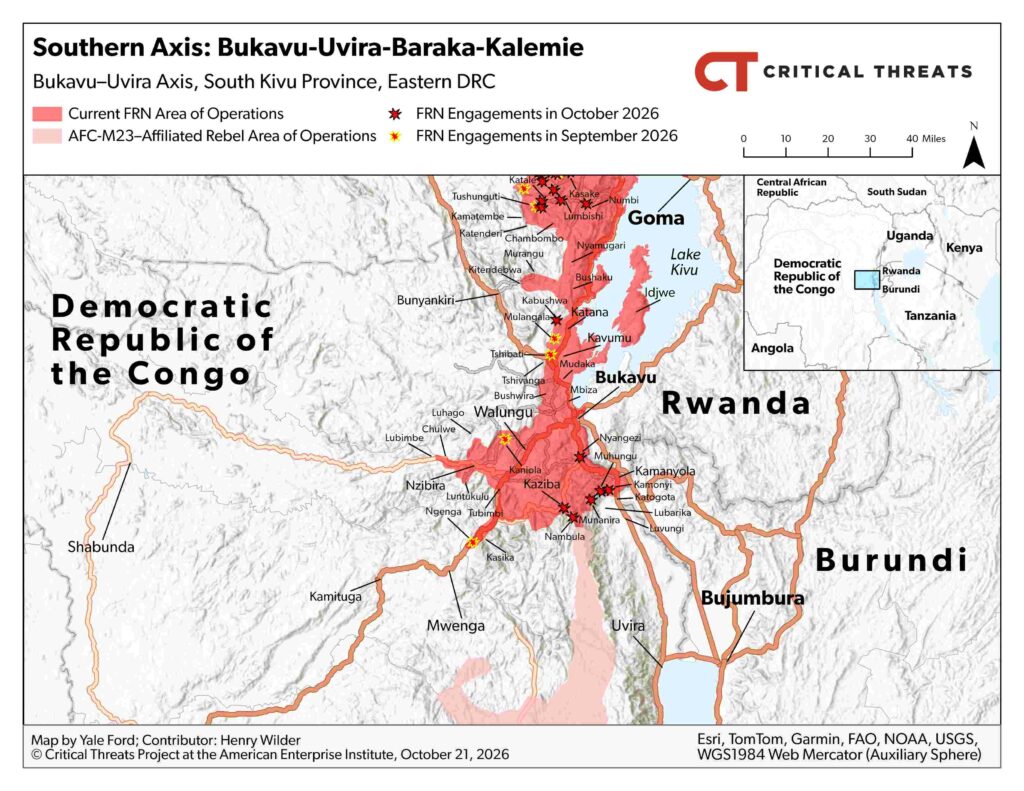
South Kivu Central Axis: The FRN and its integrated Twirwaneho militia units have launched sustained infantry operations down the ridges of Kaziba and the Mitimbili hills. Displacing thousands of households, these maneuvers aim to gain full line-of-sight oversight over the main transport arteries connecting Bukavu to the southern territory.
-
Minembwe Southern Fortress: In the high plateaus around Minembwe, Point Zéro, and Rugezi, pro-government forces continue deploying armed drone strikes against FRN positions. The plateau remains an elevated defensive stronghold for the FRN, protecting its southern flank from surrounding counter-attacks.
The Strategic Importance of Uvira
The tactical focus in South Kivu remains sharply attuned to Uvira, a critical commercial hub situated along Lake Tanganyika. Holding high-ground artillery positions in the Kaziba and Bijombo hills gives the FRN clear line-of-sight oversight over the northern approaches to the city.
Capturing Uvira would allow the FRN to sever the primary overland supply lines sustaining Burundian regular troops (FDNB) fighting alongside the FARDC in South Kivu. However, Burundi regards Uvira as indispensable to its own border security against anti-Gitega armed groups. Consequently, Burundian forces remain heavily entrenched along the Ruzizi Plain, creating a high-stakes military bottleneck that could trigger wider interstate escalation if breached.
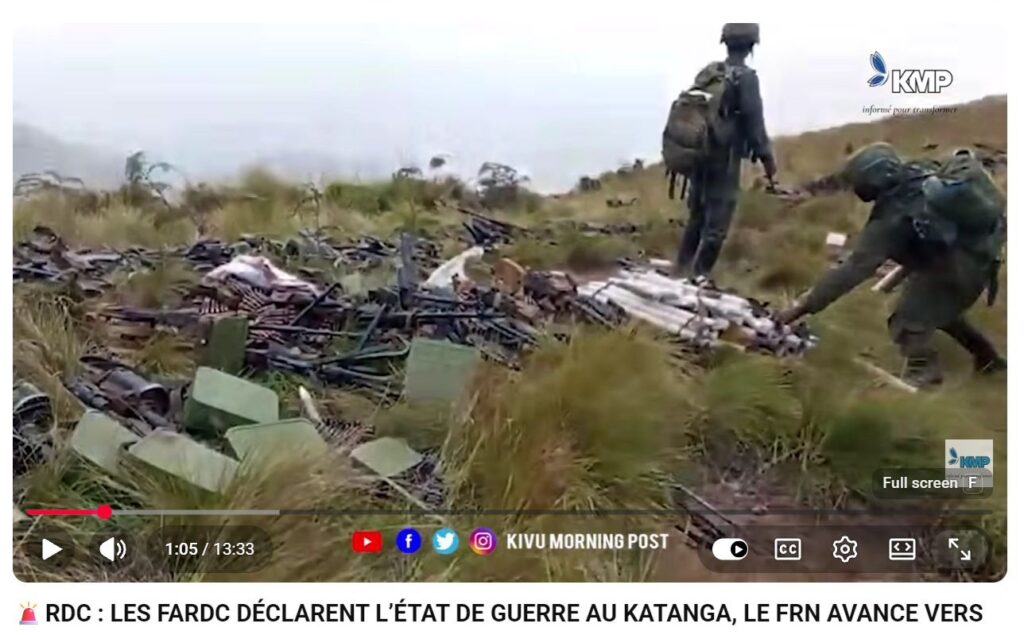
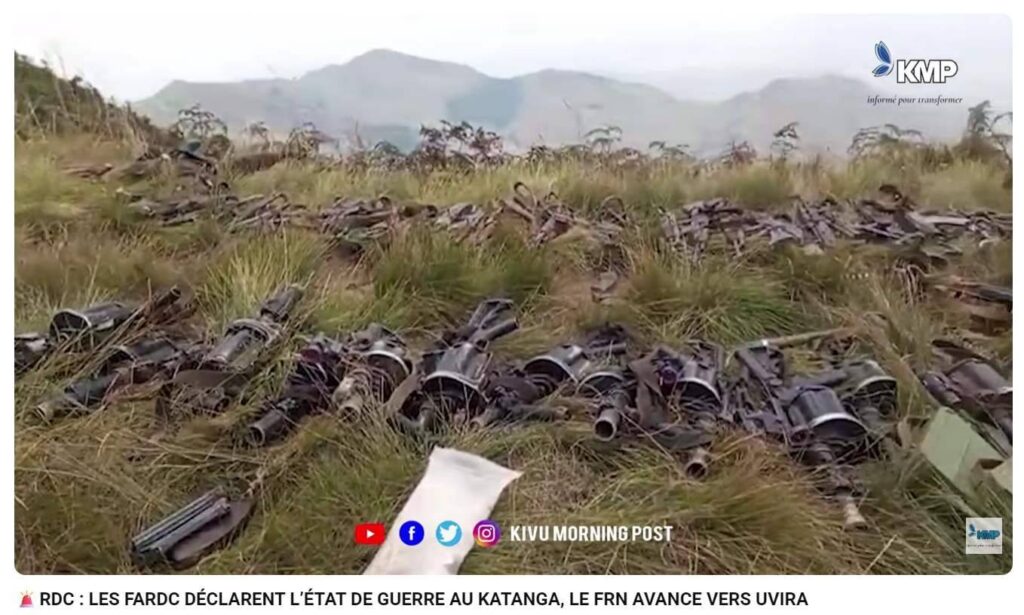
Recent rebel offensives and drone strikes in the South Kivu highlands have forced the pro-government coalition to abandon strategic positions, including a large weapons cache left by Congolese and Burundian troops fleeing the hills of Kadezi near Uvira. These tactical retreats have severely fractured the Kinshasa-aligned alliance, with Burundian forces openly accusing the Congolese army (FARDC) of deserting the battlefield and leaving the combat burden entirely to them, the FDLR, and local Wazalendo militias. Meanwhile, the FRN has capitalized on the rout, broadcasting their weapons seizures and attributing heavy allied casualties to rebel sharpshooters.
Institutional Response in Kinshasa
In response to Kabila’s direct assumption of command, the administration in Kinshasa has enacted rigorous internal security protocols. International travel for senior military commanders has been suspended to mitigate defection risks and prevent clandestine contact with FRN networks.
Concurrently, legal and administrative measures have intensified. The Ministry of the Interior formally banned political parties linked to Kabila’s alliance, while judicial authorities continue to uphold Kabila’s treason sentence in absentia, effectively shutting down formal domestic avenues for political negotiation.