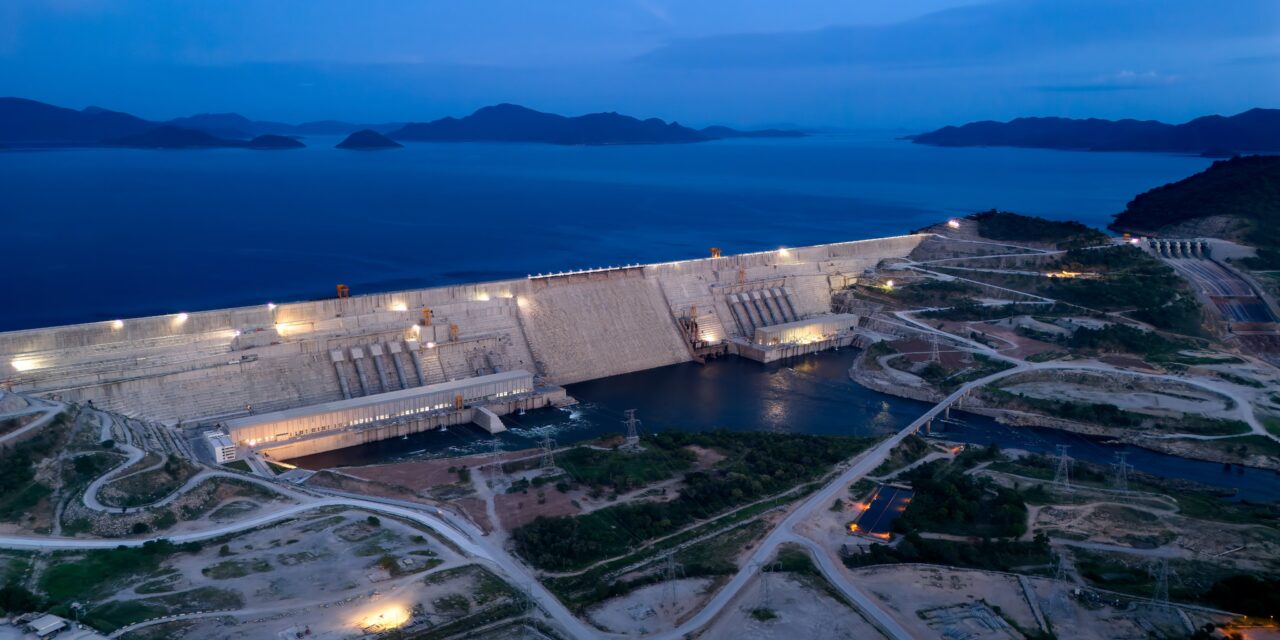
A general view of the Grand Ethiopian Renaissance Dam (GERD) in Guba — Photo @Webuild_group.
The GERD is more than an infrastructure project—it became a national symbol of pride and independence, often described as Ethiopia’s “renaissance.” Its funding model gave ordinary Ethiopians a direct stake in the dam’s success, reinforcing its role as a collective achievement.
A feature by Aimable Twahirwa




Financing green energy projects in Africa remains a puzzle for private sector players and policymakers, even as the continent faces mounting pressure to accelerate its energy transition.
Gathered on the sidelines of the second edition of the Africa Partnership for Renewable Energy Investment Forum (APRA 2025), held from October 20 to 23 in Freetown, Sierra Leone, a group of energy experts emphasized the urgent need to establish “organized systems of bankable energy projects” that can attract donor financing.
Their discussions also focused on the importance of mobilizing blended finance and leveraging strategic minerals essential to renewable energy systems. These concerns reflect growing momentum across the continent to unlock viable investment pathways and accelerate Africa’s green energy transition.
Delegates lamented that the biggest obstacle so far is the difficulty many African countries face in expanding energy access while meeting global decarbonization targets and aligning with green industrial policies.
The International Renewable Energy Agency (IRENA) has warned that initiatives such as wind farms, solar plants, and biomass facilities demand significant investment to deliver the long‑awaited energy transition. Globally, IRENA projects that renewable capacity must grow by 1,000 GW annually by 2030 to keep the 1.5 °C climate goal within reach.
On the continental level, IRENA Director General Francesco La Camera underscored the urgency of collective action: affordable capital must reach viable projects if Africa is to overcome persistent financial barriers. “The development of renewable energy and energy efficiency requires much larger volumes of affordable financing,” he declared at the forum’s opening.
APRA itself is an international alliance led by African nations determined to drive renewable energy and green industrialization. Its members include Djibouti, Ethiopia, Ghana, Kenya, Mozambique, Namibia, Rwanda, Sierra Leone, Uganda, and Zimbabwe. Partners such as Germany, Denmark, the United Arab Emirates, the United States, and Japan are providing expertise and financial backing.
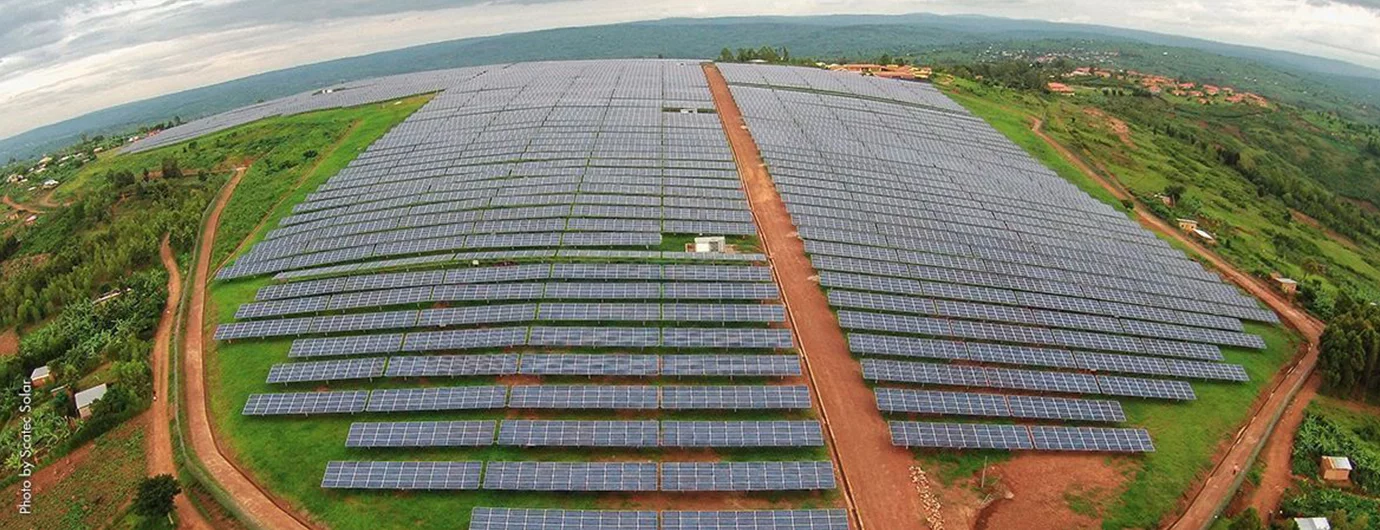
Gigawatt Global Solar Energy Plant at the Agahozo Shalom Youth Village in Rwanda. Photo Gigawatt Global
In Rwanda, efforts to expand renewable generation have already shown success. The country has set a target of sourcing 60% of its energy from renewables such as hydropower and solar by 2030. Minister of Infrastructure Dr Jimmy Gasore believes these efforts will help Rwanda meet the Sustainable Development Goals by ending poverty and inequality. “We must indeed modernize and renovate our infrastructure to ensure that it is suited to the new energy system we are creating,” he told Mongabay.
Dr Kandeh Yumkella, head of Sierra Leone’s Presidential Initiative on Climate Change, Renewable Energy and Food Security (PI‑CREF), and chair of Africa’s Energy Governance Coordination Group (EGCG), said APRA’s work will enable African nations to sustain the green transition. Launched at the African Climate Summit in Nairobi in September 2023, the initiative seeks to deliver cleaner, more resilient energy systems across the continent.
IRENA estimates that Africa’s energy demand will double by 2040. Without a global transformation of the energy sector, the Paris Agreement’s 1.5 °C target will remain out of reach. In 2018, only 20% of Africa’s electricity came from renewables. By 2019, two‑thirds of new global power capacity was renewable—but Africa accounted for just 2% of those additions.
“These actions require greater financing and stronger national, regional, and international collaboration.” Dr Yumkella told Mongabay.
For Rwanda, public‑private partnerships are seen as critical. Serge Wilson Muhizi, Executive Director of “Energy Private Developers” (EPD), emphasized that such partnerships are vital for long‑term economic growth, job creation, and improved energy access. “In the face of the climate emergency, public‑private partnerships stand out as a promising solution to accelerate the development of renewable energy in Rwanda as well as elsewhere in Africa,” he said.
IRENA calculates Africa’s renewable potential at 2.4 million TWh per year—50 times the world’s projected demand in 2050. Yet less than 10% of that potential is currently exploited, blocked by financial, institutional, and infrastructure barriers.
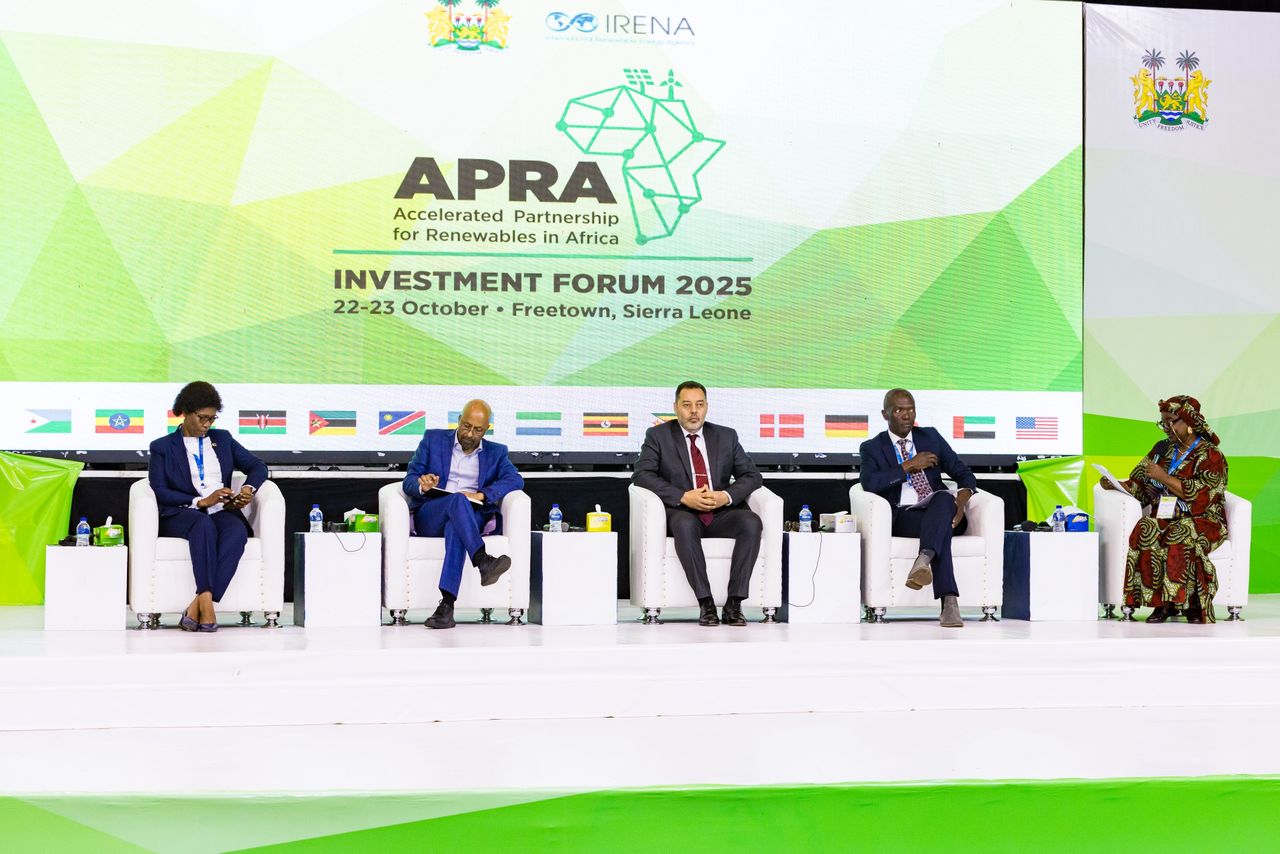
A panel during the second edition of the Renewable Energy Investment Forum (APRA 2025), held from October 20 to 23, 2025, in Freetown, Sierra Leone. Image provided by Aimable Twahirwa.
Cet article est également disponible en