

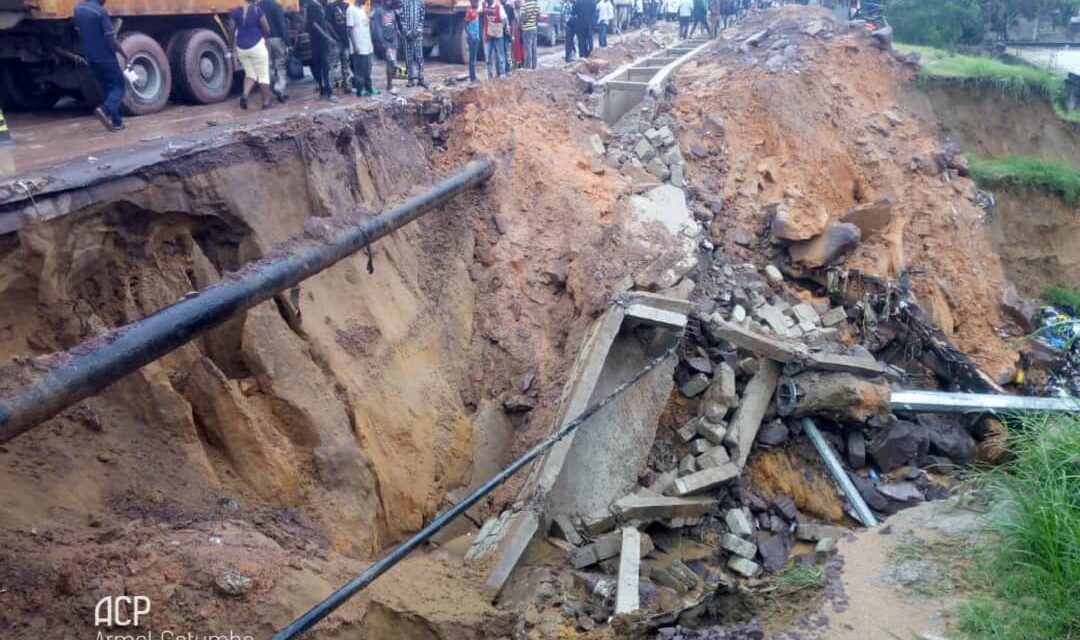
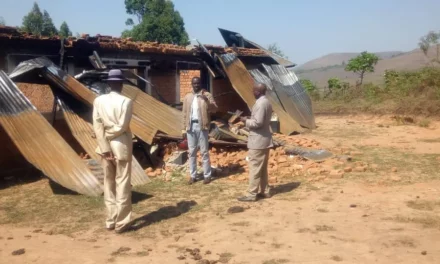
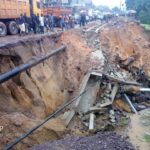
Kinshasa resembles a war zone after every flood—a direct consequence of the embezzlement of World Bank funds intended for vital infrastructure and drainage maintenance | Photo Armel Gatumba, ACP
Special Report by Claude Ndahiriwe
The Tshisekedi “Sprint”—How the DRC’s New Elite Outpaced the Kleptocrats of the Past. Under international money-laundering investigation, the Clan has ignited a calculated chaos—integrating genocidaire militias and weaponizing xenophobia as a strategic smoke screen operation.
When Félix Tshisekedi took the oath of office in 2019, promising a “rule of law” and the end of the “predatory system,” many hoped the Democratic Republic of Congo was finally closing the chapter on the institutionalized looting that defined the Mobutu era.
Seven years and two mandates later, the evidence suggests otherwise. Investigations by La Libre Belgique, other regional news outlets, and a landmark legal complaint in Brussels reveal a sobering reality: President Tshisekedi and his inner circle—the “Kasai Clan”—have not only inherited the governance failures of their predecessors but have significantly accelerated the scale of embezzlement and asset seizure. In just two mandates, the “Tshisekedi Sprint” has arguably outstripped the wealth accumulation of leaders who took decades to build their empires.
The Heir to Mobutu’s Masterpiece
The blueprint for poor governance in the DRC was drafted by Mobutu Sese Seko, the “mastermind” installed and sustained by U.S. Cold War interests. Mobutu’s legacy was the “privatization of the state,” where the treasury existed solely to fund the presidential court.
However, where Mobutu’s looting was often erratic by hundreds of millions of Usd, the Kabilas’ was systemic but slow, the Tshisekedi administration has refined the “Emergency Procedure” (Procédure d’urgence) into a high-speed vacuum for public funds. By bypassing the National Assembly and the public tender office, the Presidency has effectively decoupled the state budget from any form of oversight.
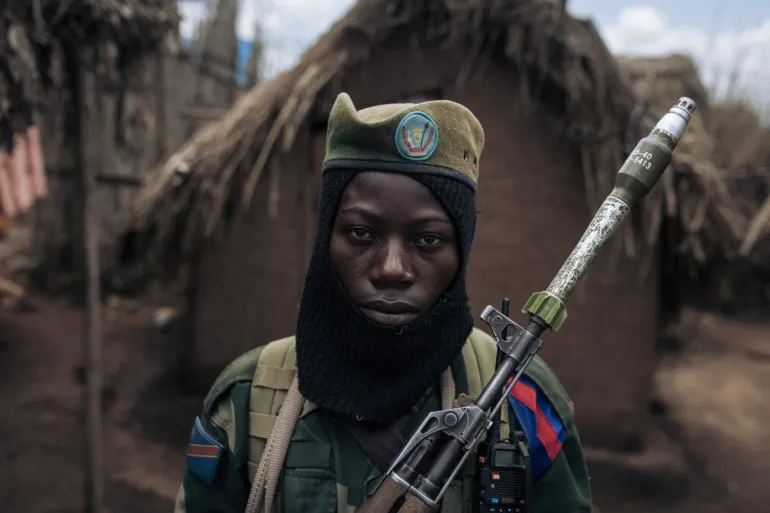
A Stolen Generation: Millions of Congolese youth, aged 12 to 20, are forced into the depths of mines or the ranks of militias when they should be in the classroom | Young fighter with the FPP AP Patriotic Front for Peace Peoples Army at the group’s headquarters in Mbwavinwa Lubero territory DRC | Photo Alexis Huguet AFP – Al Jazeera
The “Over-Invoicing” Pandemic
The hallmark of the Tshisekedi era is the “Phantom Project”—infrastructure that is either non-existent or priced at surreal margins. Few examples on thousands:
The $300,000 Water Well: In early 2024, the “Drilled Wells” scandal shocked the public. Documents revealed that the government paid nearly $298,000 per unit for simple boreholes in Kinshasa—a project that should have cost no more than $20,000.
The Solar Lamp Posts: Simultaneously, thousands of solar lamp posts were commissioned at a cost of roughly $5,000 each, more than triple the international market rate.
The Ghost Employee System: A 2025 audit by the IGF (General Inspectorate of Finance) revealed that the state pays $66 million monthly to 145,000 “ghost” employees. These funds are reportedly siphoned to maintain the “patronage network” of the Kasai Clan.
The “Sicomines” Black Hole: Despite the 2024 “renegotiation” of the $7 billion minerals-for-infrastructure deal with China, billions remain unaccounted for. While the state claimed a victory for “Congolese interests,” watchdogs like Le Congo n’est pas à vendre (CNPAV) noted that nearly $2.8 billion in expected mining revenue vanished between the state-owned Gécamines and the central treasury.
Vidiye Tshimanga Scandal: A pivotal moment occurred when Tshisekedi’s special advisor, Vidiye Tshimanga, was filmed offering a “fake” mining company unlimited access to minerals in exchange for a 20% stake for himself and “the boss” (the President).
The $16.8 Billion Gap: A more recent audit (June 2025) by the DRC Court of Auditors—covered extensively by La Libre Belgique and Ecofin—visualizes a staggering $16.8 billion shortfall in underreported mining revenues between 2018 and 2023.
Geography of Loss: The maps of embezzlement highlight the Lualaba and Haut-Katanga provinces as the “Red Zones” where the discrepancy is highest, particularly around industrial sites where “emergency contracts” bypass the central treasury.
The Clan’s Seizure of Mineral “Tailings” and Billions of Subcontracting Projects
Perhaps the most brazen shift under Tshisekedi is the direct physical seizure of mineral assets by the “Presidential Clan.”
The Katanga Tailings: A 2025 report highlighted the illegal seizure of Gécamines “tailings” (mineral waste rocks rich in copper and cobalt) worth an estimated $320 billion.
Subcontracting Monopoly: The presidential family is accused of monopolizing the $10 billion-a-year subcontracting sector in the mining industry, effectively taxing every major private operation in the country through front companies.
The Francophonie Games (2023–2024): Originally budgeted at $48 million, the cost of hosting the games in Kinshasa spiraled to $324 million.
According to the July 2025 complaint filed in Brussels by lawyers Bernard and Brieuc Maingain, nine members of the “Tshisekedi Clan” with Belgian nationality—including First Lady Denise Nyakeru and the President’s brothers, Jacques and Christian—are implicated in a massive money-laundering circuit. These “tailings” are reportedly being exploited via private front companies, with “facilitation fees” flowing into private accounts in Dubai and Brussels.
Ghost Employees: An IGF audit in 2024–2025 revealed that the state payroll was being bled of $66 million every month through 145,000 “ghost” employees—fictitious names that allow high-ranking officials to siphon off salaries meant for teachers, soldiers, and doctors.
Presidential Spending: In 2022, data showed the Congolese presidency spent $41 million in a single month, significantly higher than the monthly budgets of major European presidencies.
“Congo Hold-up” Continuity: Although the Congo Hold-up leaks primarily targeted the Kabila era, media investigations in 2025 suggest the same mechanisms—using banks like BGFIBank DRC to move unexplained millions—continue under the current leadership.
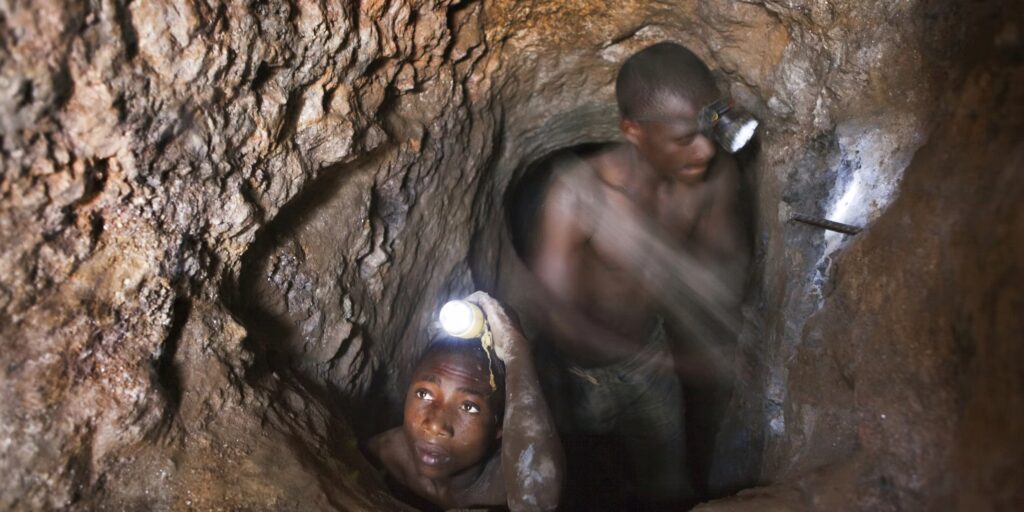
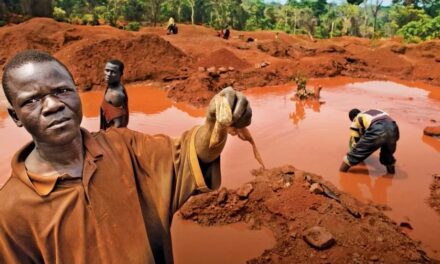
KOLWEZI DRC – Miners pull up a bag of cobalt their colleague is digging underground inside the CDM (Congo DongFang Mining) Kasulo Mines | Photo Sebastian Meyer – Fortune
The Washington Deal: A Premise Compromised at the Source
The US-DRC “Washington Accords” on critical minerals, heralded as a way to secure the Western EV supply chain, are now seen as fundamentally compromised. The U.S. strategy seeks a “transparent” source of minerals, but the practical reality is that the gatekeepers of these minerals are the very people named in the Brussels embezzlement complaint.
The Strategic Asset Reserve (SAR), managed by the Presidency, allows the clan to “reserve” the most valuable areas for themselves, only to “flip” them to American firms in exchange for private payouts.
A convenient Distraction: The Human Cost of the Sprint
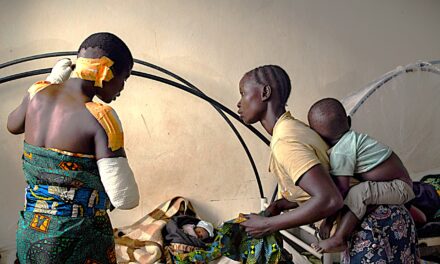
Ultimately, the “Tshisekedi Sprint” represents more than just a fiscal tragedy; it is the fuel for a perpetual cycle of violence. The catastrophic governance of Tshisekedi, mirroring the patterns of his predecessors, has directly fueled the rise of over 100 armed rebellions across the country. By hollowing out the professional military and administrative structures, the state has created a security vacuum that it often attempts to fill by welcoming and integrating genocidaire militias into national defense coalitions.
To sustain this system of predation, the administration has increasingly weaponized xenophobic rhetoric and ethnic scapegoating. This promotion of “hate-speech as policy” has served as a convenient distraction from high-level embezzlement, but it has had lethal consequences—directly inciting massacres in minority communities and deepening the regional divide.
As the Belgian courts move forward with the investigation into the “Brussels Nine,” the international community faces a hard truth: the “Washington Deal” is not just financially risky, but economically, juridically, socially unsustainable due to the modus operandi of Felix Tshisekedi and his clan; it is built on a foundation of a nationwide predation and human rights abuses that trade the lives and safety of the Congolese in general, and of Congolese minorities for the convenience of a critical minerals supply chain. The “Sprint” has not just outpaced the kleptocrats of the past; it has left the Congolese people further from peace and prosperity than ever before.
Updated on 21 March 2026






Very good article
Thank you for this information