

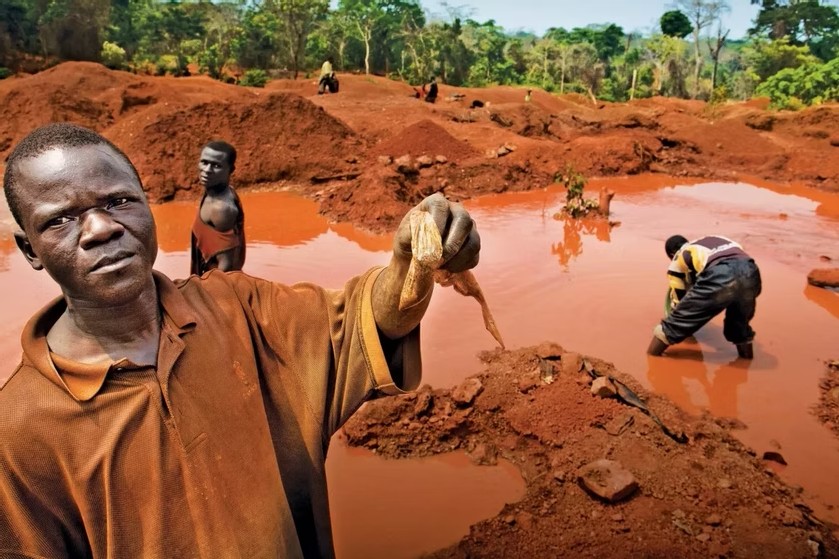
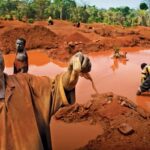
A miner shows a bag containing coltan in the Democratic Republic of the Congo | Credit Alfredo Falvo-Contrasto-Redux
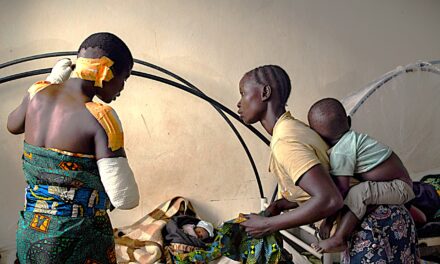
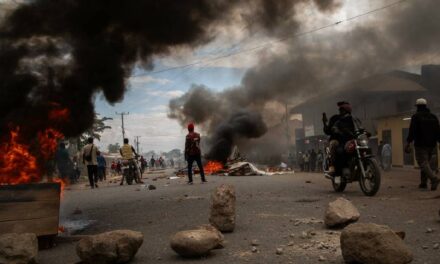
Deep in the highlands of Eastern DRC, the crack of a rifle is less a sign of ‘random’ war and more the start of a calculated business deal. While the international community sees only chaotic fighting among 200 militias, the reality is a ‘War of Clearance.’ To the elites running this system, local families in the villagesare simply obstacles sitting on top of a fortune. To reach the minerals, the land must first be emptied. By using hate speech to spark terror, the ‘Triangle’ forces millions to flee—transforming vibrant villages into vacant mining zones where wealth can be extracted in total silence.
The 200-Army Problem: A Legacy of Fragmentation
The current crisis is not a new war, but a 30-year mutation. It began with the 1994 Genocide against the Tutsi in Rwanda, which pushed over a million refugees and armed génocidaires (the Interahamwe) into the DRC. This sparked two “World Wars of Africa,” involving nine nations and dozens of proxy groups.
When the formal wars ended in 2003, the violence did not stop; it fragmented. Today’s landscape of nearly 200 armed groups is the result of a deliberate security vacuum. In the absence of a reliable national army, local communities form Maï-Maï self-defense units. However, these groups quickly mutate into “business ventures.” Rebellion has become a viable career path for youth with no schools or jobs, and every time a leader is killed or integrated into the army, his subordinates splinter off to form new, smaller groups to maintain their local “taxation” (looting) rights.
The Iron Triangle: Who Profits?
The extraction of gold, coltan, and diamonds relies on a “predatory triangle” that links the halls of power in Kinshasa to the jungle floor.
The Political Elites (Presidency & Ministers): They provide “legal” cover and divert public funds from the FARDC (National Army) budget to support “friendly” militias.
The Generals: High-ranking military figures establish “parallel chains of command.” Instead of fighting rebels, they deploy troops to secure mining concessions.
The Militias & Customary Chiefs: Militias act as the “ground force” for violence the state cannot officially commit. Customary chiefs, meanwhile, provide the “traditional” authority to reallocate land once the original inhabitants have been cleared.
The Scheme: A militia (funded by a General) attacks a village. The population flees. The General then declares the area a “Red Zone” for security reasons. With no civilians left to claim land rights, the General’s “private” mining cooperative moves in to extract minerals with zero oversight and 100% profit.
The Funding: Public funds from the FARDC budget are frequently diverted. A 2024 UN Security Council report (S/2024/432) noted that “FARDC financial resources and soldiers were diverted from the fight against armed groups to the protection of private interests in the mining sector.”
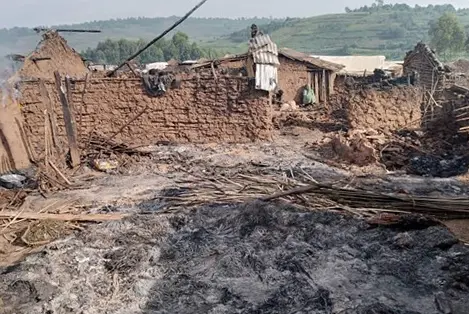
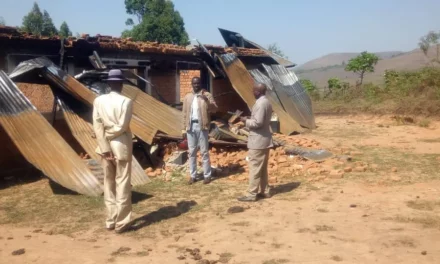
CODECO militiamen destroyed and burned hundreds of displaced Hema civilians huts on June 2023 Ituri – Photo HRW
Attacks by CODECO against the Hema community have persisted for two decades, driven by a combination of factors. These include ‘ethnic cleansing’ to secure gold mining sites and a climate of state-sanctioned hate speech. The tragedy at the Lala Camp is particularly egregious, as it occurred within range of FARDC and MONUSCO camps that were well-informed of the risk but failed to prevent the assault
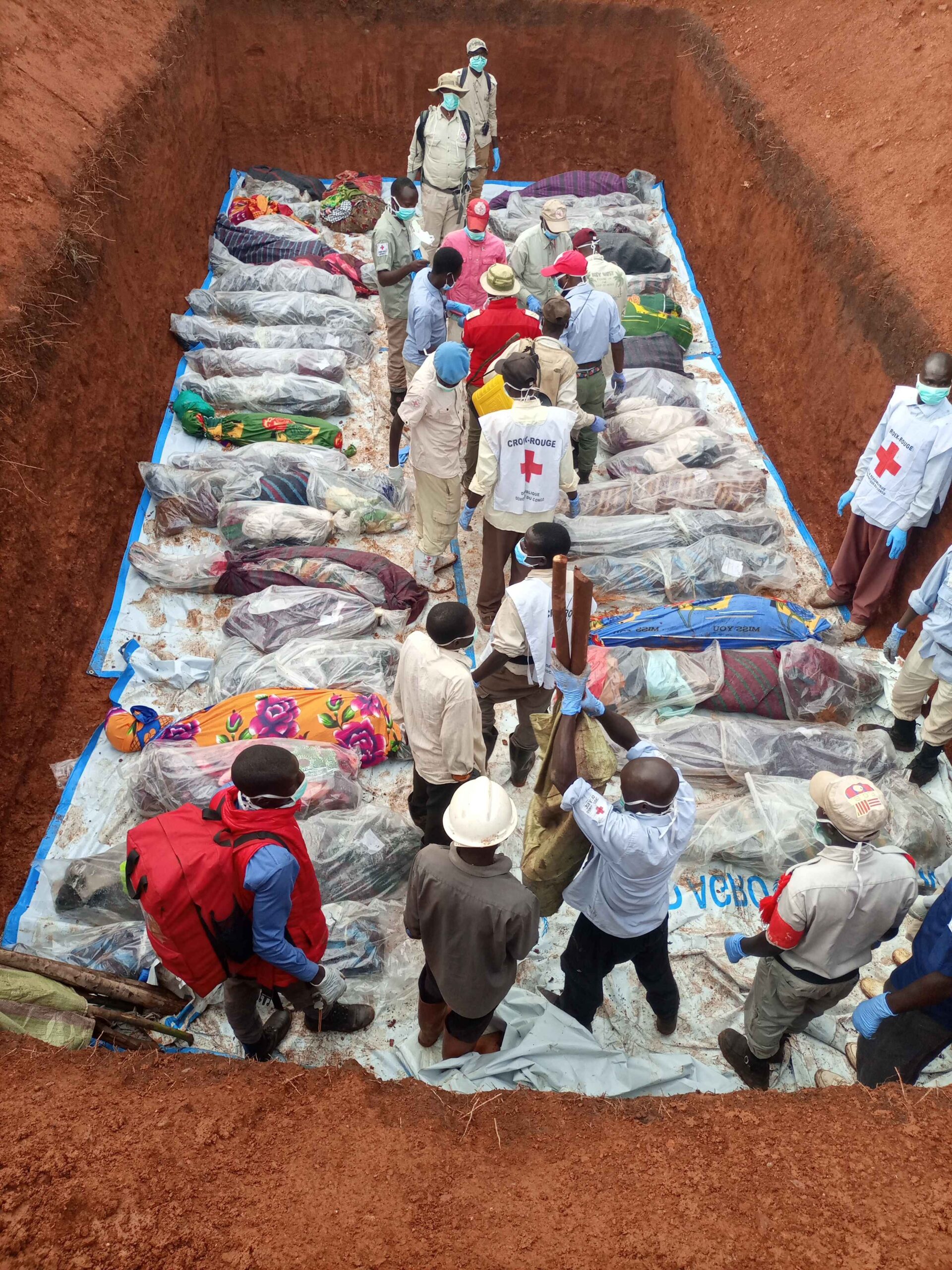
CODECO attack against Hema civilians. Most of the dead were buried in a mass grave two days after the attack near Lala camp Ituri province DRC 14 June 2023 | Photo HRW
This is how HRW summarises this event were Lendu’s CODECO militia killed 46 Hema civilians in an IDF “Lala Camp”, in Ituri, on 12 to 13 June 2023.
…//… Displaced people and residents of the adjacent village, Lodinga, alerted by phone both the Congolese military and the United Nations Stabilization Mission in Congo (Mission de l’Organisation des Nations Unies pour la stabilisation en République démocratique du Congo, MONUSCO), while the attack was unfolding, but received no help. “There was fire, which could be seen from afar, there was gunfire that they could hear, but they didn’t come,” a 32-year-old Hema man said. A militia fighter hacked the man’s son, 8, to death. “I don’t know what will happen to us if the government leaves us without security in the camp.”
Congolese soldiers staffed a position about 1.5 kilometers away. They entered the camp only after sunrise, once the militia had left, to help gather the dead and wounded.
UN peacekeepers, based about six kilometers away at a base in Bule, could not intervene as one of their armored personnel carriers broke down, the commanding officer, Maj. Imran Tareq, told Human Rights Watch. This prevented them from moving in a convoy of two vehicles as the mission requires….//…
…//… Much of the bloodshed has been fueled by competition over Ituri’s gold mines, which have long been a cash cow for rebels, politicians, and Congolese military officials involved in smuggling gold into neighboring countries. In December 2022, the UN Group of Experts on Congo reported that “CODECO factions and Zaïre continued to fight over, and benefit from, gold exploitation and gold trade,” including by imposing taxes on goods, civilians, and economic actors. They also said that some Congolese army officers collaborated with armed groups and benefited from gold-mining activities. …//…
The Economics of Xenophobia and Terror
In this system, hate speech and extreme violence are not “byproducts”—they are essential tools for clearing land.
Xenophobia as a Land Cleanser: By labeling certain Congolese populations (particularly the Banyamulenge or other Rwandophone groups) as “foreigners” or “invaders,” the Triangle erases their legal right to the land.
The Psychological War: Reports of cannibalism, mutilation, and ritualistic killings serve a specific economic purpose: they ensure that displaced populations are too terrified to ever return to their mineral-rich ancestral soil, see our article Special report: The economics of extinction in the Kivus, DRC.
From Kabila to Tshisekedi: A Shift in Tactics
While the actors change, the “Conflict Economy” remains remarkably stable.
The Joseph Kabila Era (2001–2019)
Under Kabila, the system relied on “Parallel Chains.” Figures like General Gabriel Amisi (“Tango Four”) among many others were documented by the UN and Global Witness for using military positions to acquire mining licenses and deploying soldiers to protect private pits. The violence was often managed through “non-integrated” army units that functioned like private militias.
The Mechanism: Generals would intentionally keep conflict “simmering” to justify their presence in mining areas. They would deploy troops not to fight rebels, but to secure mines and smuggling routes.
Specific Case: The Bisie mine in North Kivu was for years controlled by the 85th Brigade of the FARDC, which operated essentially as a private militia for senior officers in Kinshasa while officially being part of the state army.
But also dozens of militia were operating with the same scheme from Ituri to South-Kivu. This scheme is still in operation where M23 is not yet fully in control.
The Félix Tshisekedi Era (2019–2026)
Under Tshisekedi, the strategy has shifted to the “Wazalendo” (Patriot) Framework. The government has “unofficially”, then “officially” integrated these militias into the state security architecture to fight the M23. However, the 2024–2025 UN Group of Experts reports confirm that these “patriots” are often more active in the Rubaya coltan mines than on the front lines, involved in illegal mining and taxation in the areas they control such as Rubaya Mines; also committing widespread lootings, killings, mainly targeting tutsi communities.
But before the Wazalendo were “officialised”, the Tshisekedi regime was working under the same scheme inherited from the previous administration.
Under President Félix Tshisekedi, the rise of the Wazalendo (patriotic) militias has created a new layer of this dynamic.
This triangle ensures that as long as there are minerals in the ground, there will be “instability” on the surface. Peace, in this context, is not just a diplomatic challenge—it is a threat to the most profitable business model in Central Africa.
“It is crucial to specify that millions of displaced persons in Goma were forcibly relocated by the Tshisekedi-FARDC-Wazalendo alliance prior to the M23’s entry into the city. This move appears to have been a calculated strategy to manufacture a humanitarian crisis against the M23 for the benefit of the international community, while simultaneously clearing strategic hills for mineral extraction. Currently, as these populations return to cultivate their land and produce prices stabilize, the regional focus has shifted. The East now faces a new two-pronged assault: continued drone strikes from the Kinshasa-led coalition and an engineered liquidity crisis, as banking services remain suspended and the supply of Congolese francs is restricted by Kinshasa.”
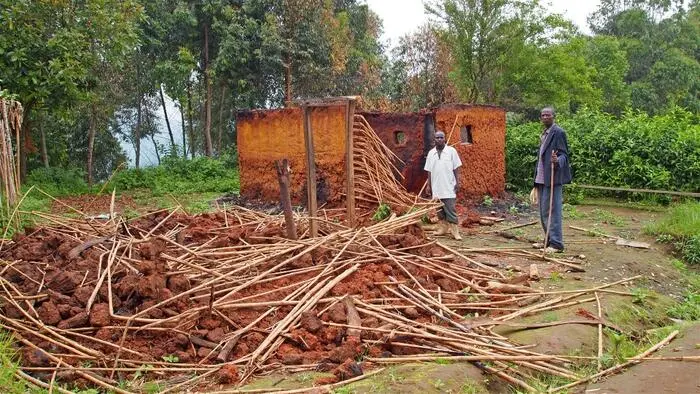
Killings and Burning Homes of Batutsi by PFLS-FDLR as they were confronting FARDC, in the period of “Mixage-Brassage”, in Kichanga – 2013
The Alternative Strategy to emptying the land: Extortion
While the “War of Clearance” aims to empty the hills for mining, the Triangle employs a second, equally predatory tactic in areas where the population remains: Systemic Extortion. Where communities are not forcibly evicted, they are instead transformed into captive revenue streams. This is not just “rebellion”; it is a Parallel Administration that bleeds the population dry through several channels:
The Shadow Tax: Militias, FDLR, Mai-Mai factions and their FARDC backers impose “taxes” on rural families that far exceed any official government levy. Farmers are forced to surrender a significant portion of their produce, cattle, and small livestock. In many territories, the “Rebel Tax Collector” arrives before the crops are even harvested.
Highway Robbery as Policy: For the transporters of the East, the roads are a gauntlet of illegal checkpoints. Buses and trucks are routinely ransomed, with drivers and travelers forced to pay “passage fees” to militias—including the FDLR—who have operated with impunity since the Kabila era and continue to do so under Tshisekedi where M23 is not present.
The Pillage of the Commons: This culture of lawlessness extends into the DRC’s “green gold.” For decades, groups like the FDLR have treated the Virunga National Park as a private warehouse, clear-cutting ancient forests for charcoal and poaching endangered wildlife for the bushmeat trade.
Whether through the terror of displacement or the slow strangulation of extortion, the goal of the Triangle remains the same: the total monetization of the Eastern DRC. While the environmental destruction of the national parks is a tragedy itself for another day, the most immediate and violent engine of this machine is the illegal exploitation of minerals.
From the Abyss to the Ascent
“The ultimate question—and the monumental task ahead—is whether the AFC/M23 can transform the ‘Dantean descent into Hell’ that has come to define the DRC into a virtuous spiral of stability and growth.
This descent is not accidental; it is a meticulously manufactured insecurity designed to sustain an elite few while trapping 90% of the population in systemic poverty. Perhaps most challenging is the need to dismantle a deeply entrenched culture of corruption that has permeated not just the leadership, but the very social fabric of the nation. To succeed, the movement AFC/M23 must catalyze a total societal transformation, replacing the predatory triangle with a transparent, accountable administration. In this high-stakes environment, failure is not an option; for the millions displaced, refugees and the millions more waiting for a better future, the movement has no other choice but to prevail.







Very good article
Thank you for this information