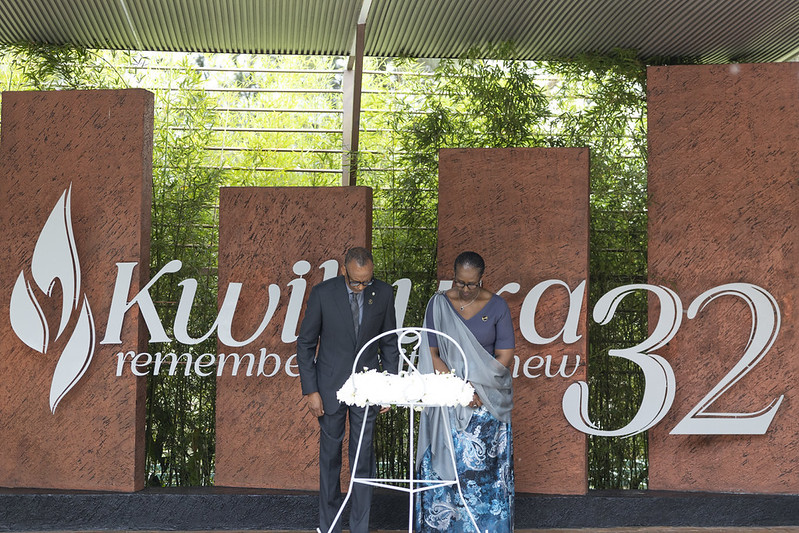
A Nation’s Stillness: President Paul Kagame and First Lady Jeannette Kagame observe a moment of silence at the Kigali Genocide Memorial, marking the start of Kwibuka 32
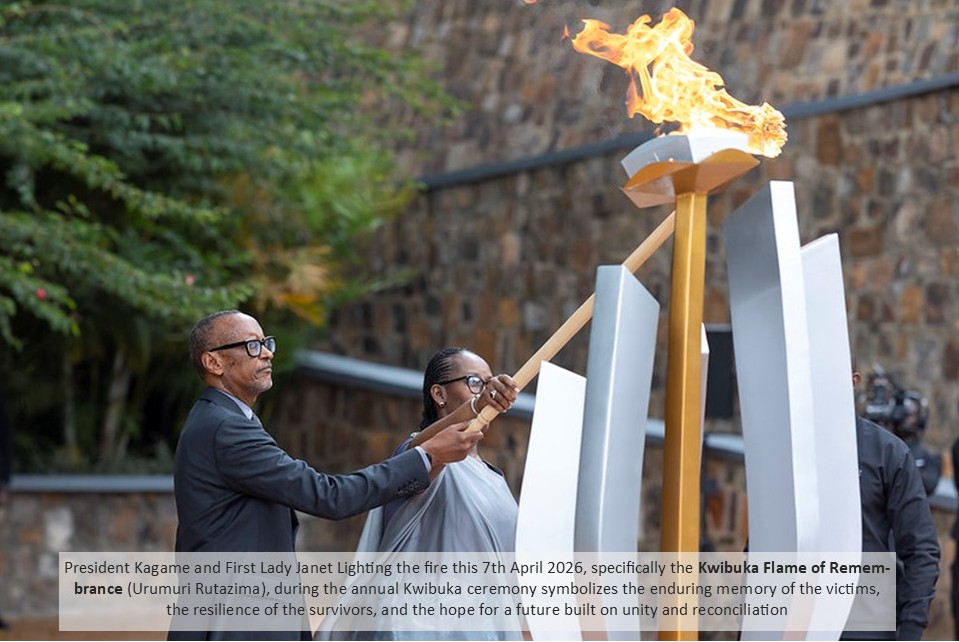
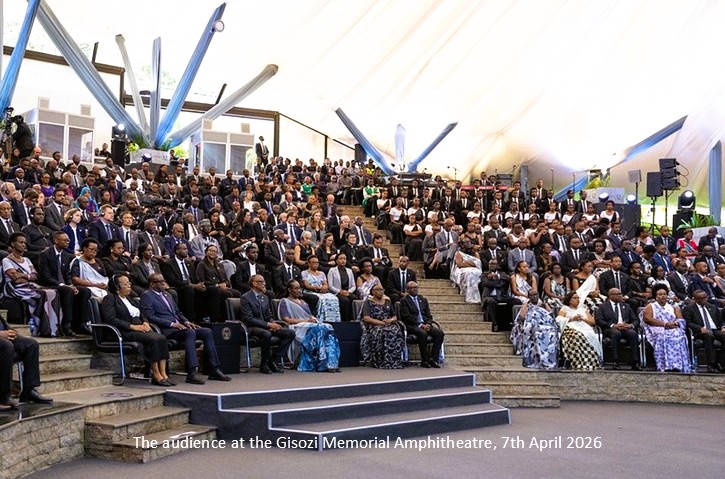
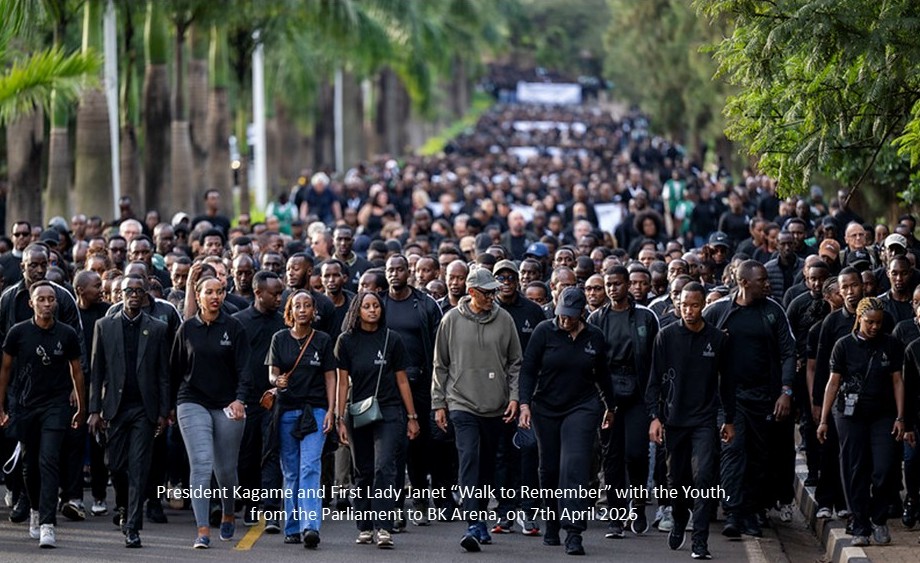
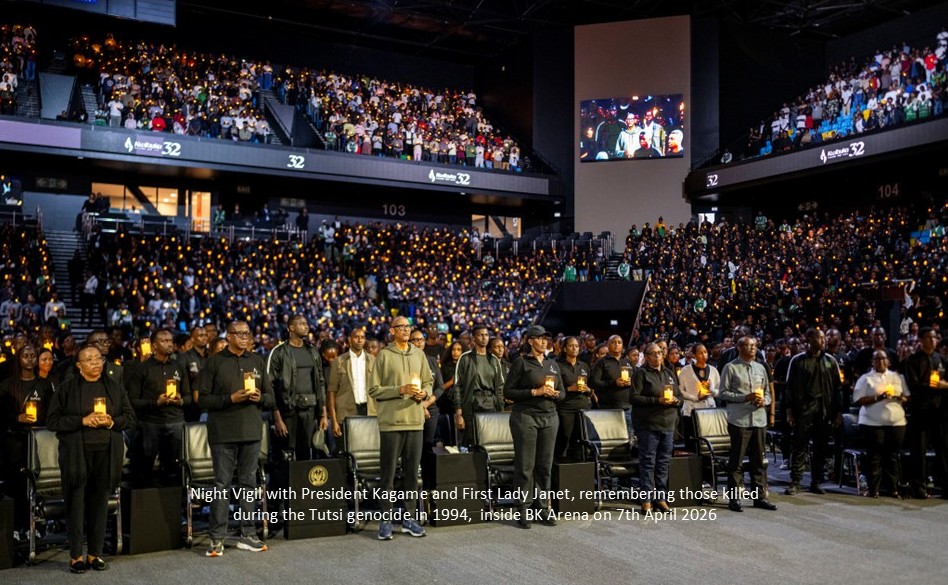
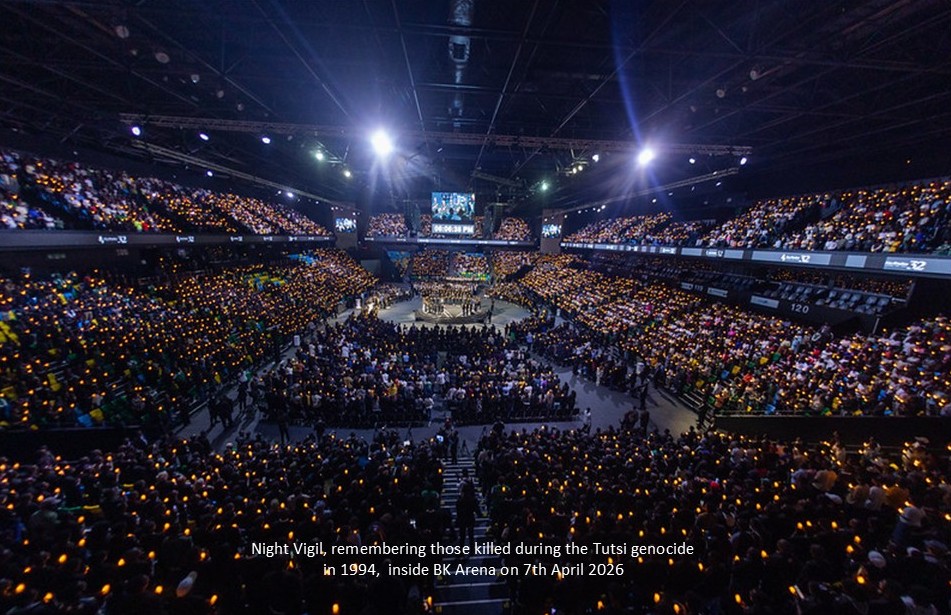
KIGALI — Under the heavy, contemplative sky of the Rwandan capital, the 32nd Commemoration of the Genocide against the Tutsi (Kwibuka 32) began not just with a moment of silence, but with a profound declaration of resurrection. As the Flame of Remembrance was lit at the Kigali Genocide Memorial—the final resting place for over 250,000 souls—President Paul Kagame delivered an address that moved beyond mourning into a clinical, defiant, and deeply solemn doctrine of national survival.
The ceremony was anchored by the harrowing testimony of a survivor named Théoneste, whose story of survival served as the President’s primary mirror. “These testimonies are not ordinary stories; they are rooted in real history,” Kagame began, his voice measured. He described Théoneste’s presence as a “form of resurrection,” a living rebuttal to those who seek to distort the past. It was from this vantage point of survival that the President issued his most striking ultimatum: “This country will not die twice.”
The Mathematics of Worthlessness
In a speech that was as much a historical indictment as a policy statement, Kagame revisited the “brutal lessons” of 1994. He moved past the generalities of international failure to expose the granular, bureaucratic indifference that cost a million lives.
He spoke of the planes that sat idle despite being capable of jamming the genocidal radio broadcasts that coordinated the slaughter. “Officials even calculated the hourly cost of the mission,” Kagame revealed. “In the end, the operation was deemed to be too expensive… In their minds, those lives were worth nothing.”
This “mathematics of indifference,” he argued, is why Rwanda will never again ask for “permission to live.” He reminded the world of the 1994 intelligence fax that was ignored by UN offices in New York and the withdrawal of peacekeepers from ETO Kicukiro—scenes of abandonment that forced the Rwandan Patriotic Army to end the slaughter alone.
The Parable of the Spreading Fire
Addressing the contemporary “noises” and shifting political alliances in the Great Lakes region, the President used a vivid metaphor to warn against the current resurgence of genocidal ideology. He compared the regional instability to a farmer watching a small fire in a neighbor’s field.
“At first, the flames are small. A few neighbors think it does not concern them,” he said. “Meanwhile, a pyromaniac is secretly adding fuel to the fire.” He warned that by the time a “fire department” is called, the forest is already gone.
His message to African institutions was clear: sovereignty must not be a “hiding place” for bad actors. “African institutions must act decisively when Africans are at risk,” he urged, calling for an end to the “moral passivity” that allowed 1994 to happen.
An Immutable Vow
Despite the poignant reflections, the tone remained one of unwavering strength. Kagame dismissed external criticisms and the gathering of insurgent remnants in foreign capitals as “just noise” that would never again take root on Rwandan soil.
“Genocide cannot happen here again. It won’t,” he declared, speaking not just as a leader, but as a witness to the determination of a new generation. He defended the honor of the Rwanda Defence Force (RDF) “who are among the finest that can be found anywhere”, was forged in the fire of the struggle to ensure that no Rwandan, young or old, would ever be “killed twice.”
Legacy and Action
As the 100 days of mourning (Icyunamo) begin, the President’s address served as a reminder that for Rwanda, remembrance is an act of defense. He closed with a call for authentic partnership, asking the global community to stand with the nation not just in grief, but in the active fight against the extremism that still spreads unchecked in the region.
“We owe future generations of Rwandans more than survival,” Kagame concluded. “They deserve to inherit a secure, united, and bold country.”
On this 32nd anniversary, the message from Kigali was unequivocal: Rwanda has used its mind to see the truth and its voice to speak it. And, as the President noted, that voice can never be silenced.