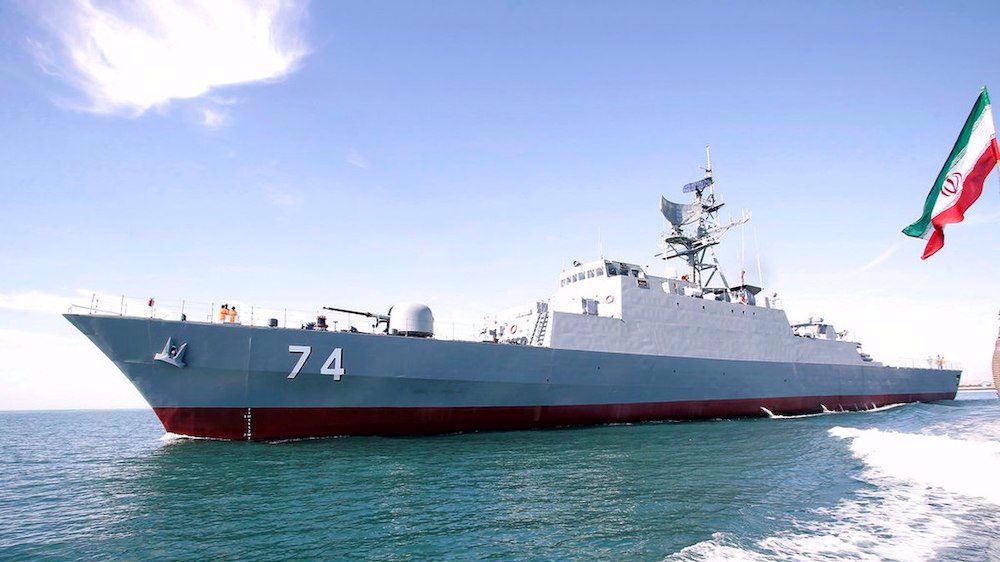
Destroyer Alborz from the Iran Navy | Photo Iran Army
The world of 2026 no longer operates on the familiar scripts of post-Cold War diplomacy. To the casual observer, the current American foreign policy appears as a tempest of erratic threats and “bullying” tactics, yet beneath the surface of the headlines lies a rigid, almost mathematical consistency.
This is the era of “Mercantile Realism”, a landscape where the “Global Village” has been foreclosed upon and replaced by a high-stakes Global Bazaar. Under this doctrine, the United States has abandoned its role as the benevolent guarantor of international order, instead viewing every global interaction through the cold lens of a ledger.
The Architecture of Transnationalism
The guiding light of this administration is a return to Jacksonian Populism, a 19th-century ghost resurrected for a digital age. Unlike the “Liberal Internationalism” that defined the Reagan and Bush years—where the U.S. often absorbed economic costs to maintain global stability—this revisionist approach is strictly zero-sum. In the mind of the “Negotiator-in-Chief,” a trade surplus held by a partner is not a sign of economic health, but a direct loss for the American worker. This philosophy transforms every alliance into a temporary contract and every military commitment into a “security product” for which “protection fees” must be paid.
This mercantile logic explains why traditional allies find themselves in the same crosshairs as rivals. Whether it is the threat to abandon NATO over spending targets or the abrupt cancellation of state visits to Denmark over a refused real estate deal for Greenland, the motive remains identical: Reciprocity Above All. The administration treats the U.S. market and military as premium assets that nations must “subscribe” to through favorable trade deals or increased defense spending. This is not traditional diplomacy; it is high-stakes litigation played out on the world stage.
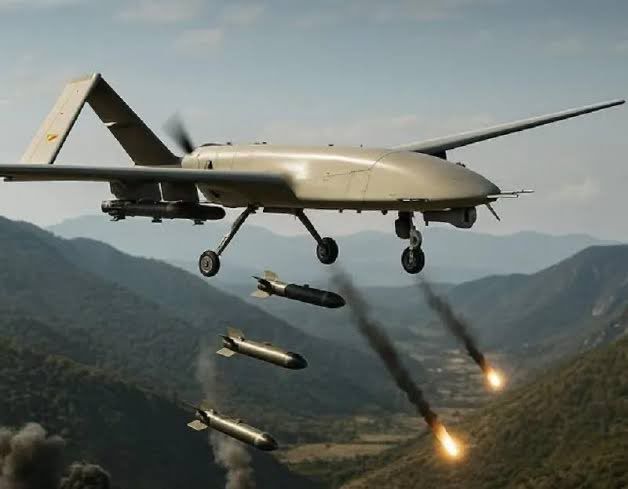
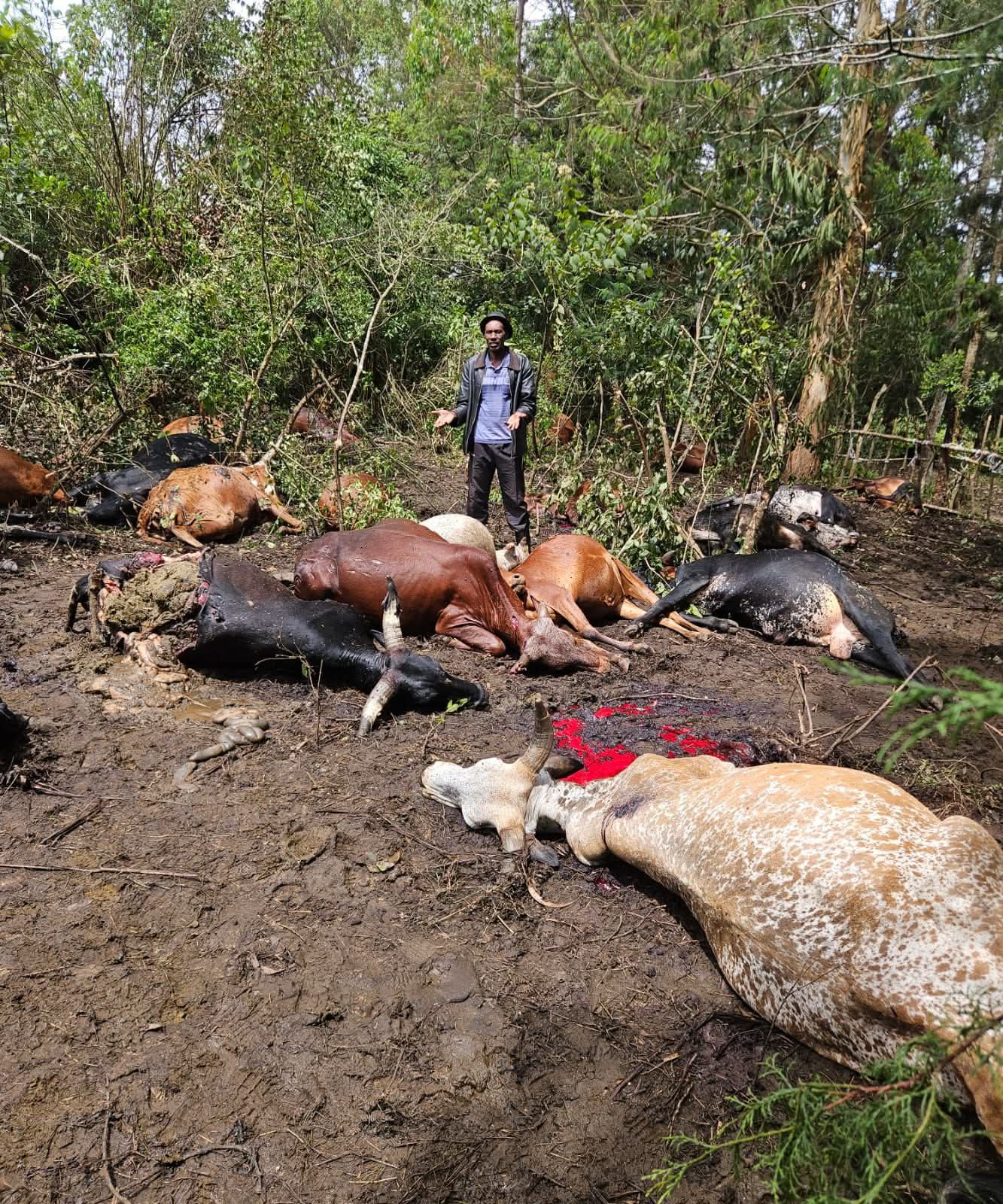
Attack drones of DRC Governement with logistic base in Bujumbura, plundering Minembwe and High Plateaus, Bukavu, in South-Kivu, and Goma, Masisi in North-Kivu, since end 2025: killing people, destroying cattle, houses, schools, clinics
The “Bras de Fer” Paradox
A fascinating phenomenon has emerged in the wake of this “bullying”: the success of the Iron Fist (Bras de Fer). While many feared that resisting such a volatile superpower would lead to ruin, 2025 and 2026 have proven that resilience is, in fact, a form of currency. The administration does not seem to respect traditional “friendship” or historical norms, but it demonstrates a profound respect for Peer Leverage.
When China retaliated against the 2025 “Liberation Day” tariffs by strangling the supply of rare-earth minerals, it did not lead to a total breakdown, but to a “Trade Détente” in Geneva. Similarly, when Canada prepared immediate, surgical retaliatory tariffs on American goods in 2025, the U.S. withdrew its aluminum tariffs in a matter of hours. This logic has even permeated the most hostile theaters; for instance, despite the heavy kinetic toll of Operation Epic Fury, Iran has refused to buckle, instead utilizing its remaining regional influence to set rigid pre-requisites and demands as a condition for continuing any negotiations.
Historical Context of Resistance as Leverage
We have seen this pattern before in various forms of “bullying resistance”:
The Vietnam Analogy: Small, determined forces (like the North Vietnamese) resisted the “military-technological” superiority of the U.S. until the political and economic cost of the war became untenable for Washington, leading to the 1973 Paris Peace Accords.
The Taliban (2001–2021): Despite 20 years of military pressure and sanctions, their “resistance” eventually forced the U.S. into the Doha Agreement, where they essentially dictated the terms of the withdrawal.
These examples suggest that for a transactional president, a country that can “hold the floor” and inflict equivalent economic or military pain is viewed as a worthy counterparty. Conversely, those who lack the defensive resilience or strategic value to resist find themselves trapped in “Maximum Pressure” scenarios. The fall of the Maduro administration during Operation Absolute Resolve in early 2026 serves as a grim reminder: resistance only wins respect if you have the leverage to survive the initial onslaught.
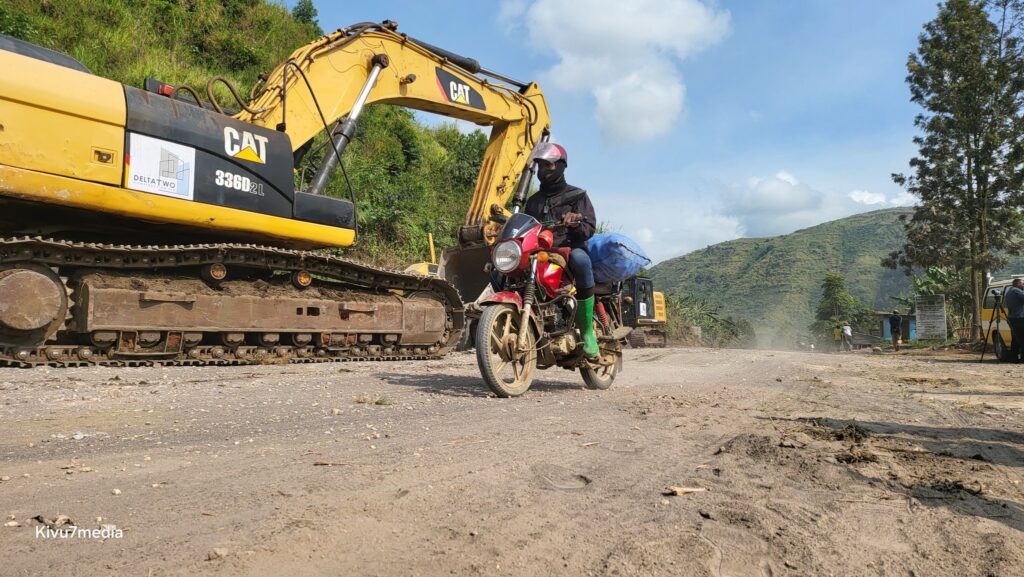
While international powers are happy that the DRC remains a chaotic ungovernable entity, the M23/AFC is taking action. The construction of roads and the installation of streetlights from Goma to Masisi are not merely projects; they are a declaration of sovereignty. “We are doing what decades of leadership—from Mobutu to Tshisekedi—failed to achieve. This is our country, and we are not just passing through; we are building a future because we are here to stay”, Bertrand Bisimwa, President of M23 | Photo Kivu7media
Crucially, managing efficiently their tax revenues, administration, a sound justice and “anti-tribalistic, anti-genocide system”, and investing – already! – in their public infrastructure, paved provincial roads, bridges, which means “we are here to stay”, the M23/AFC has secured the “commodity leverage” that a mercantile Washington may not quickly understand. They have transitioned from being viewed as mere “rebels” to being the “governors and managers” of a vital global supply chain with their underground minerals.
The Congo Crucible: Endurance as Legitimacy
This global logic is currently being stress-tested in the volatile hills of the Eastern Democratic Republic of the Congo. The Washington Accords of late 2025 were intended to be the “Grand Deal” to pacify the Great Lakes, yet they have been largely ignored by the actors on the ground. Instead of a diplomatic solution, the Tshisekedi coalition—bolstered by Burundian forces, genocidal FDLR, Wazalendo, and a heavy reliance on Chinese-built CH-4 drones and specialized mercenaries—has attempted to force a military conclusion.
However, the M23/AFC (Alliance Fleuve Congo) has adopted a strategy of Strategic Endurance that mirrors the resistance of larger nations. By withstanding over a hundred mercenary-led drone strikes and maintaining a suffocating international pressure on the Goma and Bukavu airports, the movement has signaled that the “cost” of their removal is higher than the “cost” of a deal.
The government’s coalition push is increasingly spearheaded by Erik Prince, the Blackwater founder and Trump ally, who was reportedly hired by the Congolese government with the tacit approval of Washington to oversee a “tax policing” and revenue collection initiative in the mining sector. In practice, Prince’s operation serves as a dual-purpose command: supervising the very drone surveillance and attack units currently pounding rebel positions and Banyamulenge community, while utilizing a specialized team of Latin American mercenaries staged out of Bujumbura to project force and secure the strategic “mineral corridors” of the Kivus.

Streetlamps on the new paved road Goma-Sake: since independance, this didn’t interest any previous congolese administration, it’s done by “rebels”
The Negotiated Stakeholder
As the conflict persists into May 2026, the U.S. administration’s stance appears to be shifting from coercion to a cold acknowledgment of the fait accompli. Despite Treasury sanctions against the RDF and individuals like Joseph Kabila, the movement’s refusal to fold has created a vacuum where the original Washington Accords look increasingly obsolete. In the eyes of a transactional administration, a force that cannot be dislodged by a coalition of drones and M23/AFC rebels has “earned” its seat at the table, beyond the Qatar process and negotiations.
According to the Stimson Center’s 2026 Assumptions Report, the U.S. is moving toward “negotiating with the reality on the ground rather than the ideals in the boardroom.” For M23/AFC, the goal of their current military “bras de fer” is not necessarily a total victory, but a bid for legitimacy. They are betting that in a world governed by Mercantile Realism, winning the resistance eventually forces a Washington that prizes “winners” to rewrite the rules in their favor. In this new world order, “might” doesn’t just make right—it makes the most profitable deal.
The Infrastructure of Sovereignty
In a direct challenge to the international community, the M23/AFC has begun transitioning from purely military maneuvers to infrastructural governance. By paving roads and installing streetlights from Goma to Sake and extending into Masisi, the movement is attempting to fill a developmental vacuum that they claim has been intentionally ignored by global powers. Their rhetoric is a scathing indictment of both historical leadership and foreign interests: they argue that while leaders from the Mobutu era to the current presidency have acted as “puppets,” the M23 is here to build a future because it is their country.
This shift suggests that the movement has identified a cynical cycle in global economics. In their view, the international order—including the U.S., Europe, and China—, as our Dictators, have a vested interest in maintaining the DRC as an ungovernable, chaotic entity, ensuring that strategic minerals can be extracted at the lowest possible price without the burden of long-term national investment. By building the very infrastructure that the state has failed to provide, the M23/AFC is signaling to the “Mercantile Realists” in Washington that they are no longer just a tactical force, but a “geopolitical fact” that is here to stay.