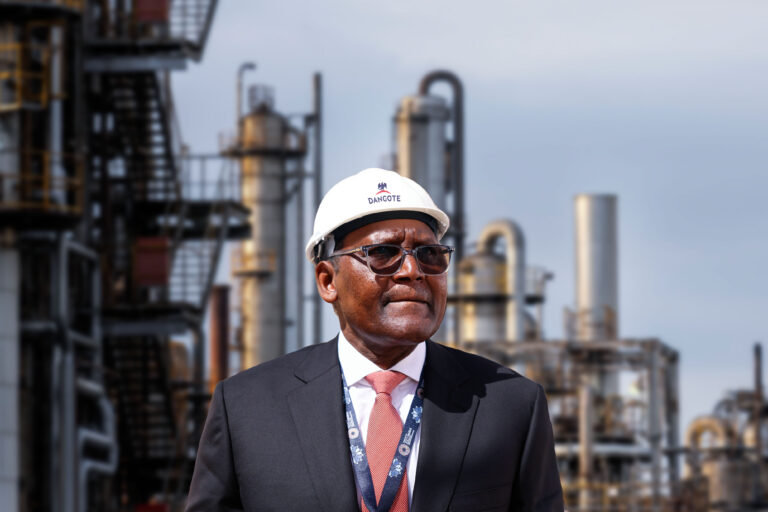
Aliko Dangote, Nigerian Industrialist | Photo WestAfDaily
The salt air of the East African coast is carrying a heavy scent of industrial ambition, punctuated by a high-stakes geopolitical chess match that has captivated the continent’s political elite. Just weeks after Aliko Dangote shocked the energy world at the Africa We Build Summit in Nairobi by pledging a massive regional oil refinery, the project has morphed from a straightforward industrial blueprint into a dramatic tug-of-war between Kenya and Tanzania. A bombshell interview where the Nigerian billionaire leaned toward the deep-water port of Mombasa sent shockwaves through Dar es Salaam, culminating in a complex regional debate over where the definitive energy hub of the continent will sit.
Replicating the Lekki Blueprint at Scale
At the heart of this diplomatic storm is a staggering seventeen billion dollar investment, serving as the crown jewel of a broader forty billion dollar continental expansion strategy envisioned by the Dangote Group through the end of the decade. This mega-refinery is explicitly designed to replicate the single-train marvel of Dangote’s facility in Lekki, Nigeria, which achieved full capacity earlier this year. The technological footprint of the proposed East African plant targets an identical processing capacity of six hundred and fifty thousand barrels per day, transforming raw crude oil into a comprehensive suite of refined products. Daily yields are projected to reach up to seventy-five million liters of Euro-V standard petrol, twenty-five million liters of high-grade diesel, and twenty million liters of aviation fuel, alongside a petrochemical infrastructure capable of manufacturing nine hundred thousand metric tonnes of polypropylene annually to anchor local manufacturing.
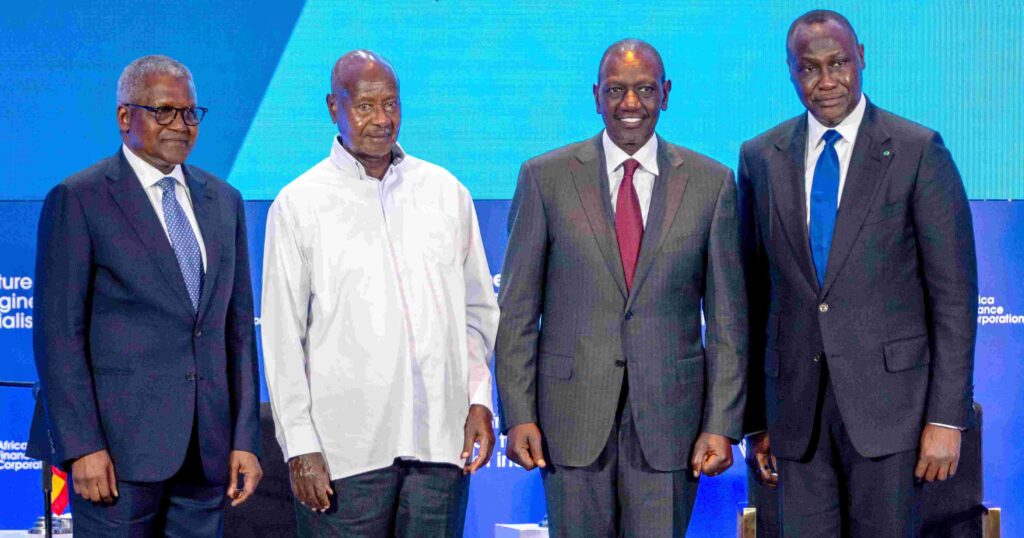
L to R: President of Dangote Group Aliko Dangote, Ugandan President Yoweri Museveni, Kenya President William Ruto, President et CEO of Africa Finance Corporation Samaila Zubairu, while attending Build Africa Summit on 23 April 2026 | Photo Dangote Group PR
Replicating the Lekki Blueprint at Scale
At the heart of this diplomatic storm is a staggering seventeen billion dollar investment, serving as the crown jewel of a broader forty billion dollar continental expansion strategy envisioned by the Dangote Group through the end of the decade. This mega-refinery is explicitly designed to replicate the single-train marvel of Dangote’s facility in Lekki, Nigeria, which achieved full capacity earlier this year. The technological footprint of the proposed East African plant targets an identical processing capacity of six hundred and fifty thousand barrels per day, transforming raw crude oil into a comprehensive suite of refined products. Daily yields are projected to reach up to seventy-five million liters of Euro-V standard petrol, twenty-five million liters of high-grade diesel, and twenty million liters of aviation fuel, alongside a petrochemical infrastructure capable of manufacturing nine hundred thousand metric tonnes of polypropylene annually to anchor local manufacturing.
The 240 Percent Surplus: Overwhelming Regional Demand
The market disruption promised by these figures cannot be overstated, particularly when compared to Dangote’s domestic success in West Africa. In Nigeria, the Lekki plant has successfully altered national economics by covering one hundred and fifty percent of the country’s daily fifty-million-liter petrol consumption, turning a historically fuel-starved nation into a net exporter. When transposed to the East African Community, where the collective daily thirst of Kenya, Tanzania, Uganda, Rwanda, and South Sudan hovers around two hundred and seventy thousand barrels, the scale of the refinery moves from mere sufficiency to absolute saturation. The facility is calculated to produce two hundred and forty percent of the entire region’s fuel requirements. For Kenya, the output could satisfy national demand more than five times over, while in Uganda the coverage reaches nearly fifteenfold. In smaller, landlocked markets like Rwanda and South Sudan, the refinery’s daily capacity represents an overwhelming fifty to sixty times their current daily domestic consumption.
This massive structural surplus forms the foundation of an aggressive, multi-tiered export strategy. Once domestic pumps across Nairobi, Kampala, and Kigali are fully supplied, the refinery is positioned to push clean Euro-V fuels deep into the African hinterland, targeting underserved markets in the Democratic Republic of Congo, Burundi, and Malawi. Looking globally, the project aims to replicate the West African pipeline that saw the Dangote Group export over a billion liters of aviation fuel to European markets in a single year, utilizing East African maritime corridors to supply Southern Africa and compete effectively in Western markets.
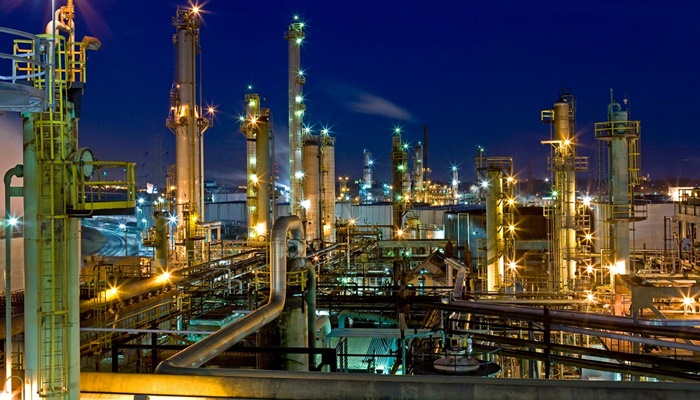
Dangote Petroleum Refinery, the Model of the EAC Dangote Refinery projected to be finalised in 2030, is a $20 billion mega-refinery in the Lekki Free Zone near Lagos, Nigeria, began operations since January 2024. It’s the world’s largest single-train refinery, with a capacity of 650,000 barrels per day (bpd). The plant is projected to refine upto 10.4 million metric tons of gasoline, 4.6 million tons of diesel, and 4 million tons of aviation fuel annually
Financing the Dream: From the IFC to Pan-African Debt Syndicates
The financial blueprint for this empire is as unconventional as its engineering. Reflecting on his early industrial journey during the Nairobi summit, Dangote recalled facing staggering forty-four percent interest rates from local commercial lenders in Nigeria. To survive, he secured a historical four hundred and seventy-eight million dollar loan from the International Finance Corporation, the private sector arm of the World Bank. In a move that stunned international lenders, the Dangote Group aggressively repaid the entire facility within eighteen months, completely bypassing the two-year moratorium period and establishing a powerful proof of concept for African creditworthiness.
Today, the financial architecture has matured far beyond relying solely on Western development agencies. The capital stack for the refining empire is now anchored heavily by continental institutions. The African Export-Import Bank recently underwrote a massive two-and-a-half billion dollar portion of a broader four billion dollar syndicated senior term loan facility. This financial engineering, executed alongside major commercial players like Access Bank, successfully optimizes the refinery’s debt profile, unlocks working capital flexibility, and establishes a robust balance sheet capable of funding the multi-billion-dollar push into East Africa.
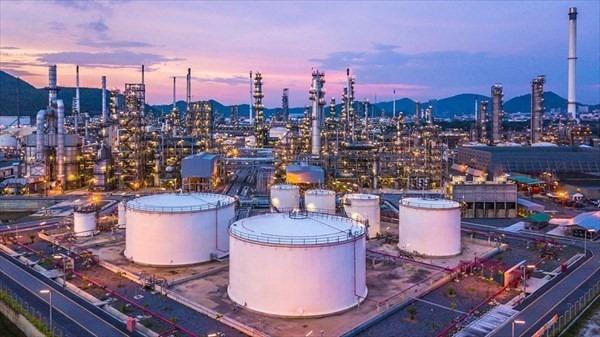
Another view of the Dangote Petroleum Refinery near Lagos
The Equity Compromise: Protecting Local Currency Sovereignty
To secure long-term political insulation and iron out the infrastructural rivalries between nations, Dangote is bypassing traditional corporate isolation in favor of a radical equity-sharing model. The cornerstone of this strategy is a highly anticipated public offering designed to float a ten percent stake in the refining business, targeting a total asset valuation of up to fifty billion dollars. Rather than listing exclusively in Lagos or looking to Western boards in London and New York, the group is engineering a multi-exchange, cross-border listing.
High-level regulatory frameworks are already being mapped out with the Nairobi Securities Exchange to ensure that East African institutional asset managers, national pension administrators, and retail investors can buy directly into the corporate structure using local capital markets. To eliminate the persistent threat of currency volatility and devaluation across the region, Dangote has structured a unique dollar-denominated dividend shield. Because the refinery generates a continuous stream of hard currency through global fuel and petrochemical exports, regional investors will receive their yields directly in US dollars, transforming the stock into a premium, protective asset for East African portfolios.
Simultaneously, the project incorporates direct state-backed joint ventures. Because the logistics of a six hundred and fifty thousand barrel-per-day refinery depend entirely on cross-border infrastructure—requiring raw inland crude from Uganda’s Lake Albert and South Sudan to travel to the coast—Dangote is carving out distinct equity blocks for regional governments. Host and partner states will be offered sovereign equity stakes in exchange for pipeline access, maritime logistics protection, and specialized energy special economic zones. This model effectively transforms East African nations from passive fuel consumers or simple pipeline landlords into genuine equity partners. Beyond the tangible steel of pipes and distillation towers, the ultimate dividend for the region lies in macroeconomic defense. By shifting entirely to domestic refining of African crude, the East African Community can finally halt the multi-billion-dollar hemorrhage of foreign exchange reserves, giving the Kenyan and Tanzanian shillings a permanent shield against global oil shocks.
The Tanga-Mombasa Megaproject: Data at a Glance
While the geopolitical chess match between Mombasa and Tanga dominates the headlines, the ultimate validation of Dangote’s East African gambit lies in the raw, unyielding mathematics of the project. The proposed refinery is not calibrated to gently supplement East Africa’s energy grid; it is engineered to completely subvert it. By localizing production, the facility turns a chronic regional reliance on foreign supply chains into a self-sustaining industrial surplus.
Consolidating the core metrics of this megaproject illustrates a scale of market saturation that is almost difficult to conceptualize. From the initial multi-billion-dollar capital injection to the hyper-inflated demand coverage percentages for individual landlocked nations, the data highlights how a single industrial node can effectively rewrite the macroeconomics of five sovereign nations simultaneously.
The structural blueprint, daily commodity yields, and regional demand impact metrics stated throughout the project framework are detailed below.
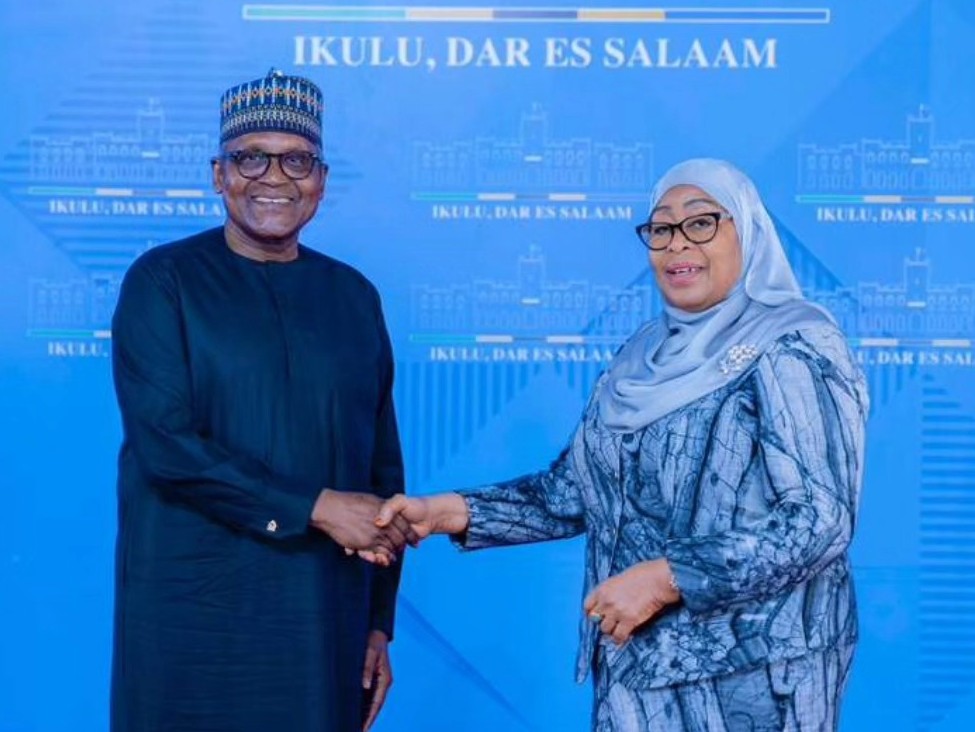
Aliko Dangote and Suluhu Hassan, the President of Tanzania, meeting at Ikulu in Dar es Salaam on 16th May 2026 | Photo State House Tanzania
| Project Component / Metric | Target Value / Volume | Regional Impact Context |
| Core Project Investment | $17 Billion to $20 Billion | Forms the anchor of a broader $40 billion continental expansion plan by the Dangote Group. |
| Total Refining Capacity | 650,000 barrels per day (bpd) | A exact single-train mirror image of the Lekki powerhouse in Nigeria. |
| Daily Petrol (PMS) Yield | 75 million liters | Refined entirely to the high-grade Euro-V environmental standard. |
| Daily Diesel (AGO) Yield | 25 million liters | Designed to power regional heavy transport, logistics, and shipping corridors. |
| Daily Aviation Fuel Yield | 20 million liters | Positioned to fully supply domestic airlines and feed international export corridors. |
| Polypropylene Output | 900,000 metric tonnes / year | Raw material base targeted to feed East African packaging and automotive manufacturing. |
| Total EAC Demand Coverage | 240% of collective consumption | Completely covers the combined 270,000 bpd thirst of the five primary partner nations. |
| Kenya Domestic Coverage | 5.6x national fuel demand | Creates an immediate structural surplus for maritime and inland re-export. |
| Uganda Domestic Coverage | 14.7x national fuel demand | Complements Uganda’s local Albertine crude processing strategies. |
| Rwanda & South Sudan Coverage | 50x to 60x national fuel demand | Permanently stabilizes fuel security for the region’s landlocked economies. |
| Proposed Public Equity Float | 10% Share Capital | Multi-exchange IPO targeted to raise up to $5 billion on local boards like the Nairobi Securities Exchange. |
Tanga or Mombasa?
As of mid-May 2026, no final decision has been officially locked in. Instead, the selection of the definitive location for the $17 billion mega-refinery has triggered an intense diplomatic and industrial tug-of-war between Kenya and Tanzania.
Initially, during regional summits in late April 2026, the project was broadly discussed with a focus on Tanga, Tanzania, drawing support from Ugandan President Yoweri Museveni.
The two coastal contenders offer starkly different corporate and logistical advantages.
The Case for Mombasa, Kenya
Advantages
-
Superior Port Depth: Mombasa is the premier deep-water port in East Africa.
For a refinery designed to process 650,000 barrels per day, the ability to seamlessly handle massive VLCCs (Very Large Crude Carriers) gives Kenya a major engineering edge. -
Dominant Domestic Consumption: Kenya has the highest domestic fuel consumption rate in the East African Community (EAC).
Placing the refinery inside its largest consumer market significantly reduces initial localized distribution costs. -
Established Northern Corridor: Mombasa already serves as the primary petroleum gateway for Uganda, Rwanda, Burundi, South Sudan, and eastern DRC.
The existing logistical pipelines and trade routes are already matured and operational.
Disadvantages
-
Severe Urban and Port Congestion: Mombasa is a dense, heavily utilized maritime hub.
Finding and securing the thousands of acres of unencumbered space required for a hazardous, world-scale petrochemical complex poses massive environmental and zoning hurdles. -
Displacement from Raw Crude Infrastructure: Mombasa sits completely independent of the East African Crude Oil Pipeline (EACOP) grid. Choosing Kenya would require costly additional pipeline infrastructure to route inland Ugandan or South Sudanese crude over to the Mombasa coast.
The Case for Tanga, Tanzania
Advantages
-
Direct EACOP Synergy: Tanga is the natural terminus of the $5 billion East African Crude Oil Pipeline originating from Uganda’s Lake Albert fields.
Co-locating the refinery at the Chongoleani terminal creates a highly efficient, closed-loop crude-to-petrol system. -
Vast Spatial Flexibility: Unlike Mombasa, Tanga offers massive, uncongested coastal land.
This land availability is a premium asset for building a sprawling “industrial cluster” where the refinery can easily expand into secondary plastics, fertilizer, and petrochemical manufacturing. -
Bi-Regional Market Pivot: Geographically, Tanga is perfectly positioned to serve two massive trade blocs simultaneously. It can feed the EAC to the north via a short connecting pipeline to Kenya, while pushing product down the Central Corridor into Southern African (SADC) markets like Zambia and Malawi.
Disadvantages
-
Maritime Depth Deficits: Tanga’s natural harbor is shallower and less developed than Mombasa’s. Selecting Tanga would demand immediate, heavy capital expenditure from the onset for extensive marine dredging and specialized offshore offloading buoys.
-
Smaller Immediate Domestic Market: Tanzania’s internal fuel market is smaller than Kenya’s, meaning a Tanga-based plant would be heavily dependent on cross-border political goodwill and export agreements from day one to remain profitable.
| Strategic Element | Mombasa (Kenya) | Tanga (Tanzania) |
| Port Readiness | High (Deep-water, fully developed) | Medium (Requires significant dredging) |
| Land Availability | Low (High congestion, urban density) | High (Massive space for industrial clusters) |
| Crude Pipeline Proximity | Distant (Requires new connections) | Direct (Terminus of Uganda’s EACOP) |
| Primary Core Market | Domestic Kenyan Focus + EAC Northern Corridor | Regional Export Focus (EAC + SADC networks) |
Dangote has explicitly stated that speed of execution and a protective investment framework will be the ultimate tie-breakers. Whichever country can fast-track special economic zone (SEZ) clearings, offer aggressive tax holidays, and legally guarantee protection against unfair foreign fuel dumping will likely secure the final signature.