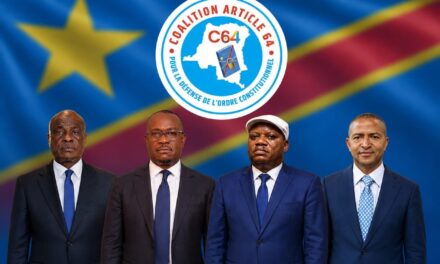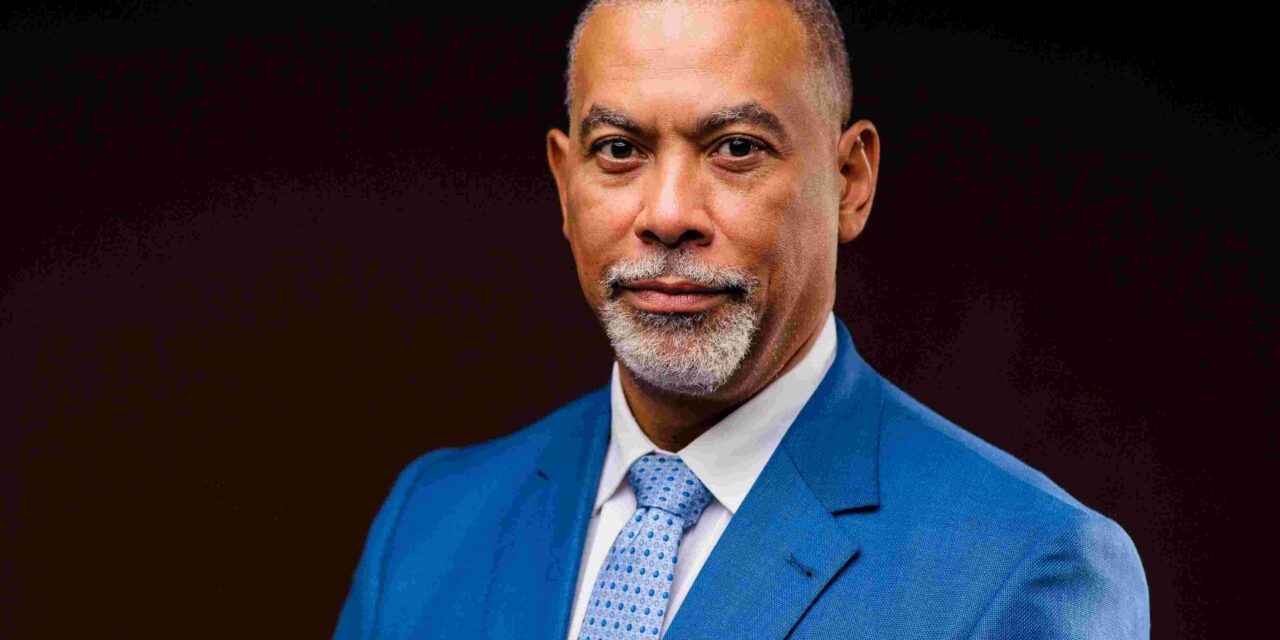
Olivier Kamitatu Etsu, one of the founding members of “Ensemble pour la Republique”, Speaker of Moise Katumbi | Wikimedia Photo
For decades, the Democratic Republic of the Congo has been a giant trying to walk in shoes three sizes too small. As we move deeper into 2026, the laces are snapping. The “Grand Debate” that has haunted Congolese politics since the days of Lumumba and Kasavubu has returned with force: Should the DRC become a federal state, or is it destined for terminal fragmentation?
The thesis is as bold as it is polarizing, in other words: Is the DRC Too Big to Stay Centralized?
The “40% Fiction” and the Case for Survival
The argument for federalism isn’t just an administrative preference; it’s a cry for survival from the periphery. Under the current 2006 Constitution, provinces are technically entitled to keep 40% of the revenue they generate. In practice, however, this “retrocession” has become a fiction. Kinshasa remains a black hole, often retaining nearly every cent, leaving local governments to beg for the crumbs needed for basic roads, clinics, and security.
Proponents argue that a centralized bureaucracy in Kinshasa simply cannot manage a landmass the size of Western Europe with competence and professionalism. Expecting one desk to simultaneously handle the mining logistics of Katanga, the agricultural stagnation of Équateur, and the complex security crises of the East has historically led to nothing but “centrally managed neglect.”
The Opposition’s Blueprint: The 60-30-10 Plan
The federalist movement gained significant momentum following the 2025 roadmap proposed by Olivier Kamitatu and supported by Moïse Katumbi’s Ensemble pour la République. Their vision seeks to replace the broken “retrocession” system with Direct Retention:
- Regional Sovereignty (60%): Provinces would collect and keep the majority of their revenue immediately.
- The Federal Center (30%): Dedicated to national defense, foreign policy, and monetary stability.
- The Equalization Fund (10%): A “solidarity tax” to ensure less resource-rich provinces aren’t left behind.
Beyond the money, the roadmap calls for Provincial Police and civil defense units—a move that would finally institutionalize regional security in a country where the national army (FARDC) has been mismanaged.
In April 2025, Olivier Kamitatu highlighted that the decentralization promised by the 2006 Constitution has remained ineffective, as provinces continue to depend on Kinshasa for both their resources and decision-making. Given the failure of the unitary model, he proposes a transition to federalism based on six major historical regions: Orientale, Équateur, Kongo, Kasaï, Katanga, and Kivu.
He added that “federalism would enable a governance of proximity, tailored to local realities, while promoting the country’s linguistic and cultural diversity.”
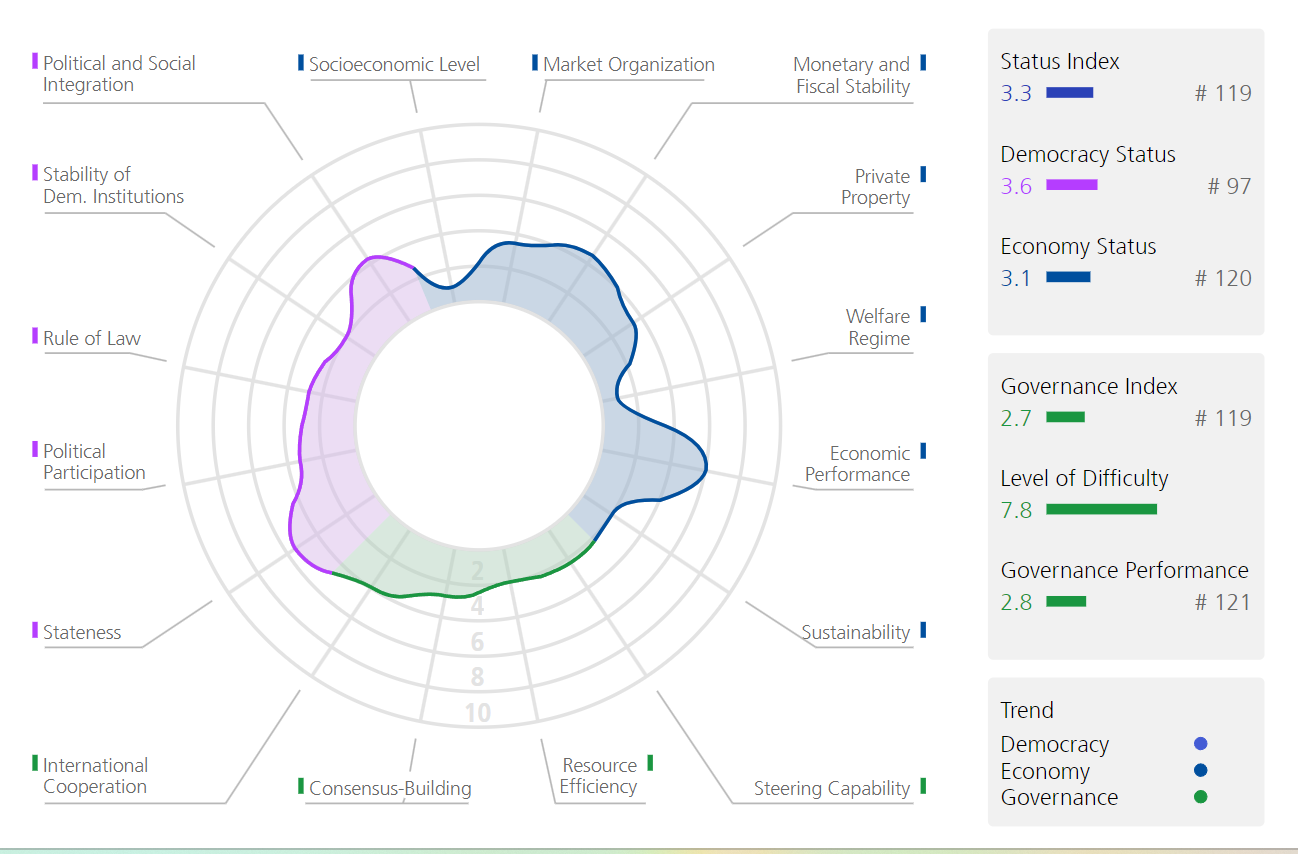
An atlas.bti-project.org Score Card 2026 on DRC, though it may be questionable on some points, it’s the only one document available on its type
A Tale of Two Cities: Goma vs. Lubumbashi
While the “Federal” label is the same, the motivations in the East and South are worlds apart.
In Lubumbashi, federalism is a battle for economic justice. There is a deep-seated grievance that the copper and cobalt wealth of Katanga funds the lifestyles of the Kinshasa elite while local infrastructure crumbles. For the South, federalism is about keeping the “copper-dollars” where they are earned.
In Goma, the call is about security and identity, as once said Bertrand Bisimwa. “A federal state allows regions with common realities to organize themselves and achieve socio-economic development,” he said. “Congo is an agglomeration of small nations within one country.” “We want to come together as a country — Kinshasa included — and talk to see how we can shape the discussion,” he said in February this year. He emphasized that federalism does not equate to secession, but rather maintains a central government while granting provinces constitutional authority over certain functions.
Following the 2025 “fragile peace” agreements, many in North Kivu believe that a general in Kinshasa cannot understand the tactical nuances of a hill in Masisi or a valley in Rutshuru. They want the legal right to manage their own provincial guards—formalizing the M23’s ARC Army and Militia “Wazalendo” (local defenders) into a disciplined, state-sanctioned force.
The 2026 Redline: A Constitutional Trap?
However, this debate sits in the shadow of a dangerous political maneuver. President Félix Tshisekedi and his administration have signaled recently that the 2006 Constitution is “obsolete.” While they borrow federalist language about “modernizing” the state, the opposition is smelling a trap.
The fear is that a “Reform” will be used as a Trojan Horse to reset the presidential clock. If a brand-new “Constitution” is adopted, it could legally allow the President to argue that his previous terms no longer count, potentially extending his rule beyond 2028. As the Catholic Bishops (CENCO) recently warned, touching the Constitution in this climate of “suspicion and manipulation” could ignite the very fragmentation federalism is supposed to prevent.
Speaking on March 25 at the conclusion of the extraordinary plenary assembly of the Bishops’ Conference held in Kinshasa from March 23 to 25, the Secretary General of the Bishops’ Conference, Donatien Nshole, noted that the bishops’ position had not changed regarding the effort to change the Constitution.
“The principle of constitutional amendment is enshrined in the constitution itself, which also establishes the procedures for its revision. The constitution lists the articles that cannot be amended,” Nshole said.
“Given the current security situation, it would be risky for the bishops to open the chapter on constitutional amendment in a context that lacks consensus,” he explained.
“Peace and democratic coexistence cannot be built on the foundation of suspicion or manipulation of constitutional principles,” the bishops said.
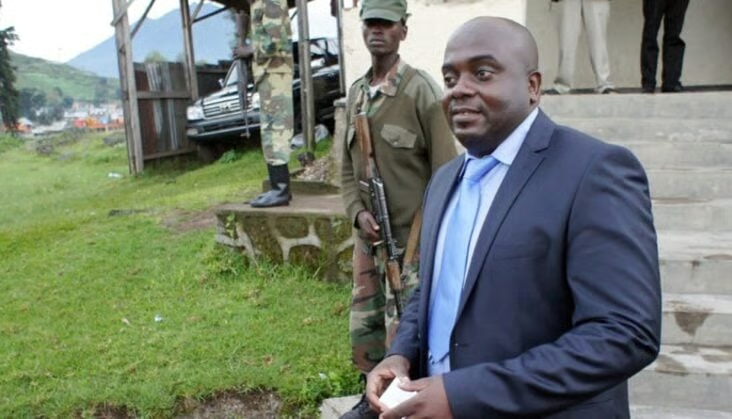
Bertrand Bisimwa, President of M23 | Photo Africa Report
The Verdict
The DRC is currently a “Highly Decentralized Unitary State” on paper, but a collection of neglected fiefdoms in reality. If the state doesn’t move toward a model where local populations have a tangible stake in their own resources and security, the “will not be” part of the thesis might become a self-fulfilling prophecy.
The question for 2026 is no longer if power should be shared, but whether the central government can agree to make concessions without waiting for the worse, new wars or even secessions.
Wisdom should lead AFC/M23 and DRC Government to agree on a process to implement federalism in their current negotiations. After these negociations, it could be very difficult.
Cet article est également disponible en