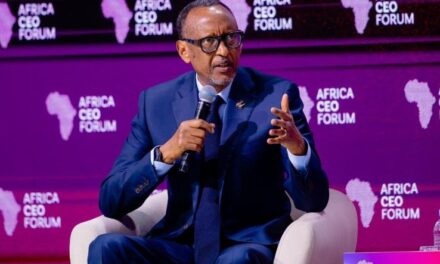
Yusuf Murangwa, Minister of Finance and Economic Planning
When Minister of Finance and Economic Planning Yusuf Murangwa unveiled the Rwf 7,796.3 billion national budget for the 2026/27 fiscal year, this 11 june, the announcement marked a defining moment in geostrategic economic planning. Representing a deliberate 12% expansion over the previous year’s revised targets, this fiscal roadmap serves as the launchpad for the Second National Strategy for Transformation (NST2: 2024–2029).
The framework operates simultaneously as a structural shield and a capital accelerant, designed to maintain high-velocity domestic growth while insulating a landlocked marketplace from an unpredictable triad of external pressures: fractured global energy corridors, regional security costs and shifting international trade mechanics.
Macroeconomic Gravity vs. Domestic Momentum
Rwanda enters this fiscal cycle backed by an economic engine that has consistently outperformed regional trends, registering a powerful real GDP growth rate of 9.4% in 2025. However, maintaining this velocity requires navigating a global economic cooling. MINECOFIN projections indicate that global expansion will soften to 3.1% this year due to escalating tensions in the Middle East.
According to risk models in the KPMG Rwanda National Budget Brief, any disruption to vital oil-transit chokepoints like the Strait of Hormuz could re-ignite global stagflation, potentially slowing international growth to 2.5% and spiking imported inflation. Addressing these headwinds during his May 2026 Ministerial Briefing, Minister Murangwa outlined the state’s resilient posture:
“Rwanda’s growth momentum remains strong, despite a challenging environment caused by war in the Middle East, climate change effects, geopolitical tensions, trade wars, among other factors. The Government remains committed to maintaining macroeconomic stability and fostering inclusive growth by investing in strategic sectors such as energy, agriculture, manufacturing, healthcare, social protection, and education.”
To operationalize this resilience, the budget divides its expenditure across three core NST2 pillars: Economic Transformation at 62.9% (Frw 4,900.9 billion), Social Transformation at 21.9% (Frw 1,711.3 billion), and Transformational Governance at 15.2% (Frw 1,184.0 billion).
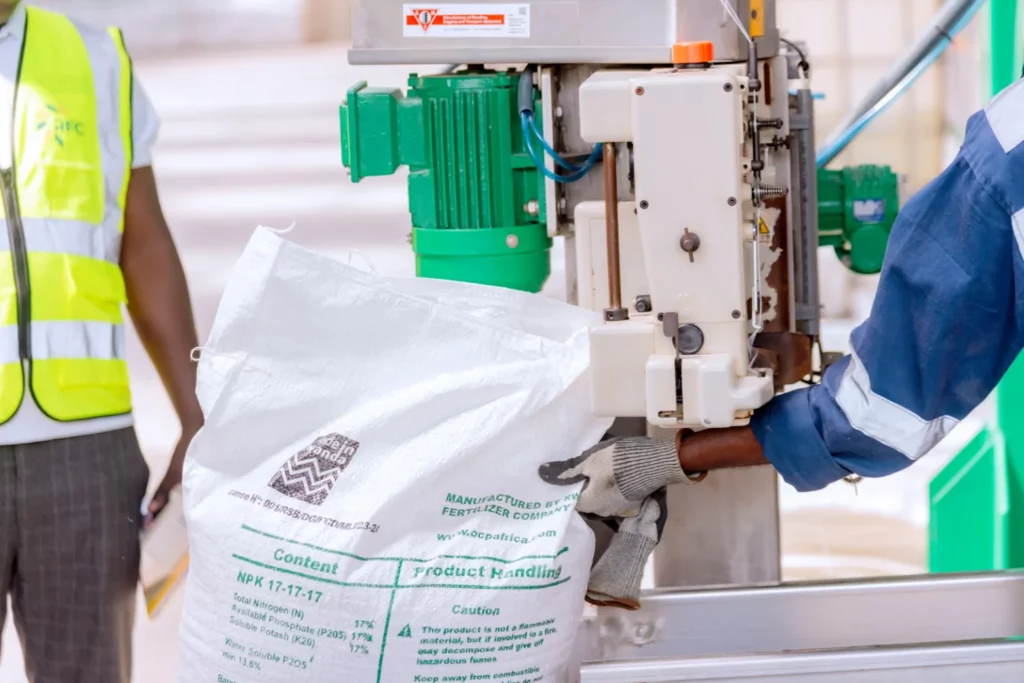
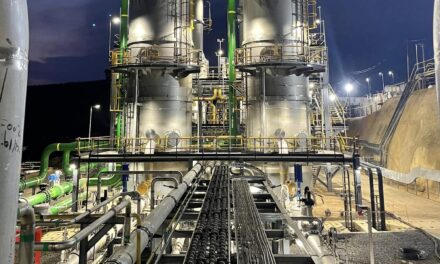
Production of fertilisers at RFC – Rwanda Fertiliser Company
Managing the Tightrope: Subsidy Shields and Infrastructure Deficits
The immediate domestic priority is neutralizing imported cost-push inflation, with headline inflation projected to hit an average of 10.4% this year due to high international fuel and chemical overheads. To protect consumer purchasing power, the state has deployed direct fiscal insulation, nearly doubling agricultural fertilizer subsidies from Rwf 39 billion to Rwf 64 billion to guarantee smallholder productivity and secure the domestic food supply.
Concurrently, the state is addressing long-term transport vulnerabilities by allocating FRW 3,010.8 billion to development spending. This includes FRW 474.2 billion dedicated to fast-tracking the construction of the New Kigali International Airport (NKIA) in Bugesera, alongside scaled support to insulate RwandAir from volatile jet fuel shocks.
However, importing the specialized machinery and structural steel required for these mega-projects will widen Rwanda’s current account deficit to FRW 2,599.5 billion, a pressure point compounded by a 31.8% retrenchment in official donor transfers. To bridge this gap without risking debt sustainability, the budget adheres to a strict, IMF-backed fiscal consolidation path. By prioritizing concessional borrowing and fixed-rate domestic instruments, the state aims to drive the long-term national fiscal deficit down to 3.1% of GDP.
Fiscal Sovereignty: Digital Tax Nets and Strategic Austerity
To finance this ambitious blueprint while capping external foreign grants at just 7% of total funding (FRW 548.3 billion), Rwanda is aggressively expanding its domestic revenue apparatus under the Medium-Term Revenue Strategy (MTRS I).
Rather than raising headline tax rates, the focus has shifted entirely to administrative compliance and digital transparency:
- Digital Leakage Controls: Mandating the universal rollout of advanced Electronic Billing Machines (EBMs) across cash-intensive retail sectors.
- Capturing E-Commerce: Enforcing a new Ministerial Order requiring non-resident digital platforms and online marketplaces to formally register for local VAT.
- Transfer Pricing Oversight: Implementing Ministerial Order No. 003/26/10/TC, which requires all cross-border, related-party transactions to mirror strict arm’s-length terms. To minimize corporate friction, the state has paired this with a formal Advance Pricing Agreement (APA) regime, providing compliant multinational firms with upfront regulatory certainty.
This revenue drive is balanced by deep internal spending rationalization. The public wage bill is capped via a strict freeze on new public sector recruitment (excluding essential education, healthcare, and security placements). Operational outlays for international per diems, airfares, and physical workshops have been sharply reduced in favor of virtual protocols, while the state transitions to bulk purchasing frameworks for medical equipment and agricultural inputs to achieve critical economies of scale.
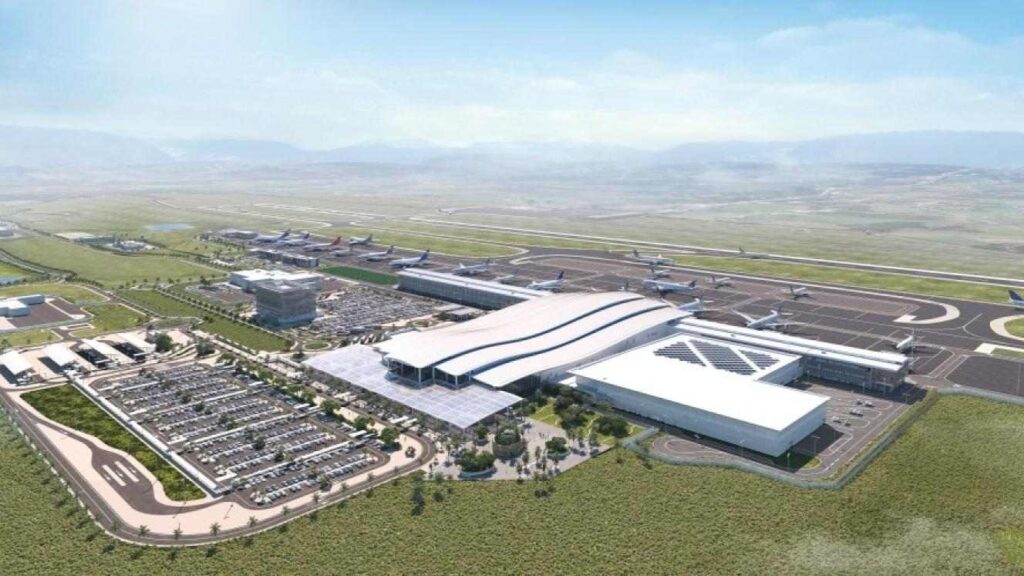
The design of the Bugesera International Airport currently in construction
The Sovereignty Anchor: Financing Regional Stability
Amid the persistent security challenges and ceasefire violations stemming from the neighboring Democratic Republic of the Congo (DRC), maintaining absolute internal peace is treated as a core macroeconomic asset—the non-negotiable floor required to attract private capital and sustain high-value tourism.
Rwanda’s strategic response to this regional volatility is reflected in its high level of fiscal self-reliance, with 93% of the entire budget envelope covered via domestic resources and internal borrowing. This insulates sovereign border monitoring and internal stability from international aid volatility. Furthermore, the state has locked in FRW 224.1 billion explicitly for Peace Keeping Operations within the recurrent framework.
This secure baseline has allowed the broader financial ecosystem to modernize rapidly. Driven by deep mobile and internet banking integration, the total value of retail electronic payments relative to GDP has reached an unprecedented 199.9%, maximizing transaction visibility. Concurrently, the informal sector safety net, EjoHeza, has surpassed 3 million active contributors, while the Kigali International Financial Centre (KIFC) has secured over 110 registered international entities, reinforcing the capital’s position as a premier Pan-African hub for sustainable finance.
Calculated Resilience
The 2026/27 national budget proves that Rwanda is refusing to navigate external shocks passively. By aligning its public expenditure directly with the structural transformation goals of NST2, the government has designed its fiscal platform to function as a responsive economic shock absorber. By subsidizing its agricultural roots, decoupling its transport corridors from global energy shocks, closing revenue leakages through an advanced digital tax net, and securing its borders through domestic resources, Kigali has built a framework designed to transform external volatility into localized resilience. The trajectory toward Vision 2050 proceeds uninterrupted.
Cet article est également disponible en