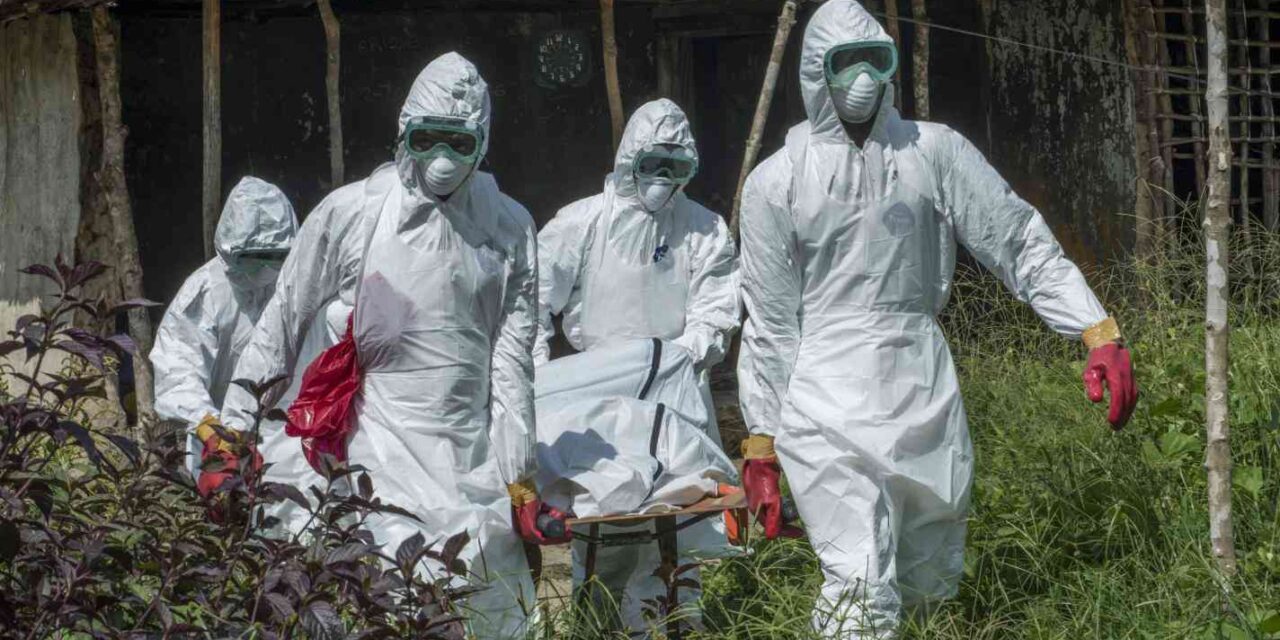
Health workers with a deceased patient near Rwampara, in Ituri Province, DRC
The Ebola outbreak currently gripping the Democratic Republic of the Congo (DRC)—the 17th in the nation’s history—is frequently reported as a biological anomaly. Yet, a closer examination reveals that the pathogen is merely the final actor in a much larger, man-made tragedy. To understand why Ebola continues to find a foothold in the DRC, one must look past the medical charts and into the architecture of a state that has systematically prioritized extraction over human life.
The Seventeen Plagues: A Symptom of Systemic Decay
Since the era of Mobutu Sese Seko, through the Kabilas, and into the presidency of Félix Tshisekedi, the Congolese state has functioned less as a service provider and more as a mechanism for elite wealth accumulation. For decades, public health has been relegated to an afterthought. There is no comprehensive national insurance system, hospital infrastructure has been left to crumble, and medical professionals—doctors and nurses—are so chronically underpaid and unsupported that they have abandoned the country in a massive “brain drain.”
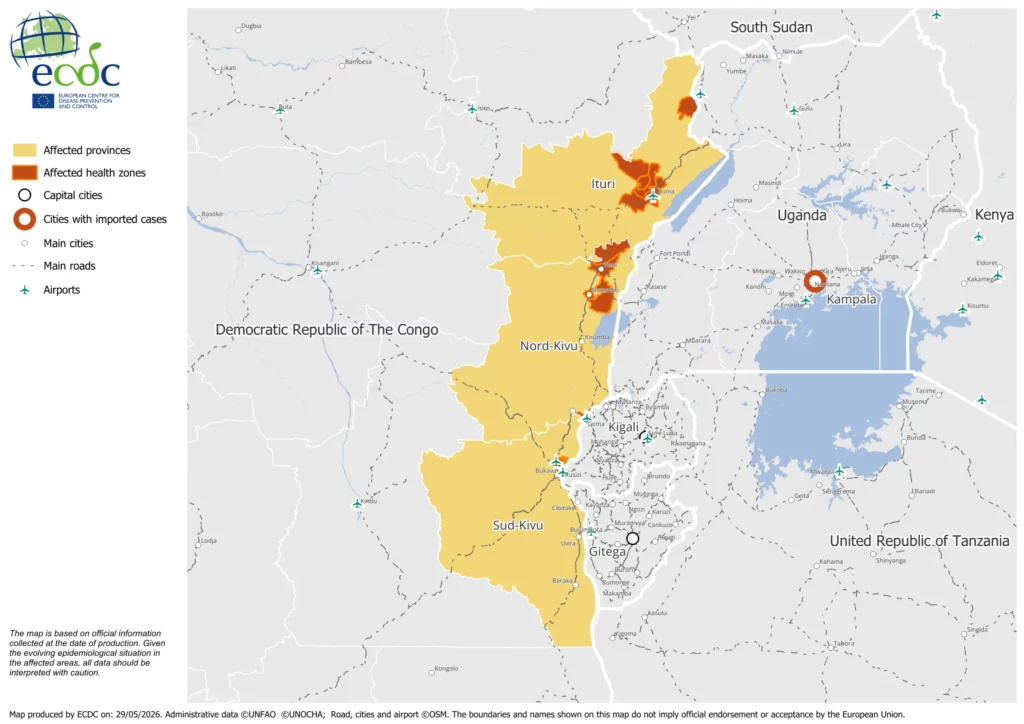
Today, the DRC’s brightest healthcare minds are operating in South Africa, Europe, the United States, and across the East African Community, while their homeland faces a shortage of basic diagnostic equipment, vaccines, and laboratory capacity. When the Bundibugyo strain of Ebola struck this year, the system was already at a point of near-collapse. The current death toll—at least 264 lives lost out of 1,205 suspected and confirmed cases—is not merely a failure of medical science; it is the predictable harvest of decades of social and economic neglect.
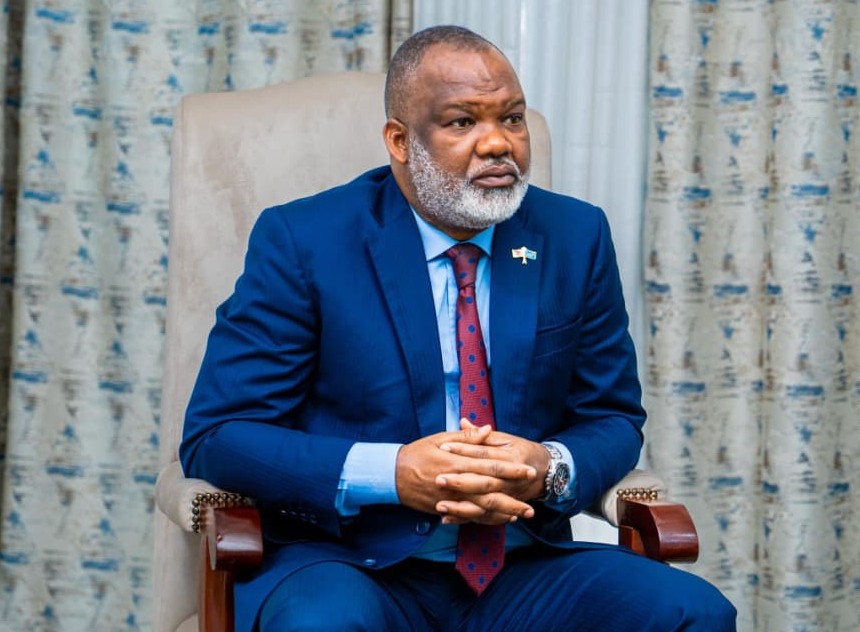
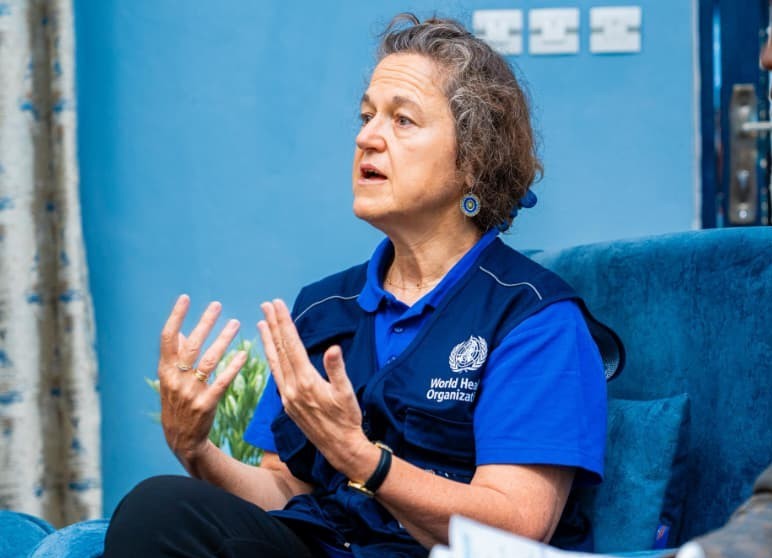
On May 26, 2026, WHO Representative ai. Dr. Anne Ancia (R) met with AFC/M23 Coordinator Corneille Nangaa (L) in Goma, where 1 imported case of a person have been diagnosed with Ebola virus. The visit centered on coordinating Ebola containment protocols and establishing health surveillance within territories currently held by the group to prevent the spread of the Bundibugyo strain.
The Deadly Triangle: The Economics of Insecurity
The inability to contain the virus in provinces like Ituri is not an accident; it is the result of what can be termed a “Deadly Triangle” of collusion. As detailed our investigative reports, How Congo’s Triangle Turns Blood Into Cash Minerals, DRC: The Black Hole of Justice and Special Report: The Economics of Extinction in the Kivus, DRC, the insecurity that keeps the DRC in a state of perpetual crisis is a calculated business model .
In this system, a tripartite alliance connects the political elite in Kinshasa, high-ranking generals, and local militias like the CODECO. The objective is rarely the restoration of peace, but rather the control of mineral wealth for personal gains. By manufacturing insecurity through the forced displacement of communities—often using hate speech to clear land—this “Triangle” turns the fertile, mineral-rich hills of the East into “Red Zones.”
In Ituri, this has left 970,000 displaced people living in 61 overcrowded, unsanitary sites. In these spaces, where malaria and other diseases are already endemic, Ebola moves with lethal efficiency. The militias, sometimes branded as “Bana ya Fatshi” [Meaning the children of Felix Tshisekedi] or integrated under the “Wazalendo” framework, operate in a security vacuum that allows for the illegal exploitation of gold and coltan while the state’s military and administrative machinery looks the other way and actively participates in the profit-sharing.
Infrastructure as an Obstacle to Survival
The crisis is compounded by the systematic failure to build an economy that serves the Congolese people. The DRC’s infrastructure—or lack thereof—is a testament to an extractive-only economic model. There are no reliable roads connecting provinces, and provincial airports are left in disrepair, effectively sealing off regions from life-saving aid.
When a health crisis hits, there is no logistical network to deploy doctors or medicines rapidly.
Instead, international agencies like the WHO and UNICEF are forced to treat the DRC like a combat theater rather than a sovereign state. The recent visit by WHO leadership, including Dr. Anne Ancia, to meet with AFC/M23 rebel leadership in Goma, highlights the reality of “another juridiction”. Because the state has lost administrative and security control of vast swathes of the East, humanitarian organizations must negotiate with non-state armed groups to establish even the most basic of sanitization corridors.
A Nation of Billionaires and the Abandoned
The most stark indictment of this era is the contrast between the opulence of the political class and the suffering of the population. Year after year, while the national budget for social sectors remains stagnant, the elite classes become billionaires through the very mineral chains that drive the conflict.
The Ebola response, therefore, has become a high-stakes negotiation where the state is often the least effective player. The government’s preparation of a budget for the crisis is often hampered by the difficulty of moving funds through a system defined by corruption and logistical voids. Meanwhile, the Governor of Ituri’s public “cry for help”—pleading for doctors, nurses, and laboratory personnel—falls on the ears of an administration that has spent decades ensuring that the very professionals he requires would rather work abroad than endure the indignity of the Congolese public health sector.
Until the DRC pivots from an extractive economy designed to enrich the few, toward a social contract that values its own citizens, the cycle of these 17 plagues will continue. The Ebola virus does not choose its victims randomly; it seeks out the spaces where governance has failed, where hospitals are empty, and where the state has traded the security of its people for the promise of personal mineral gold assets for the elite.